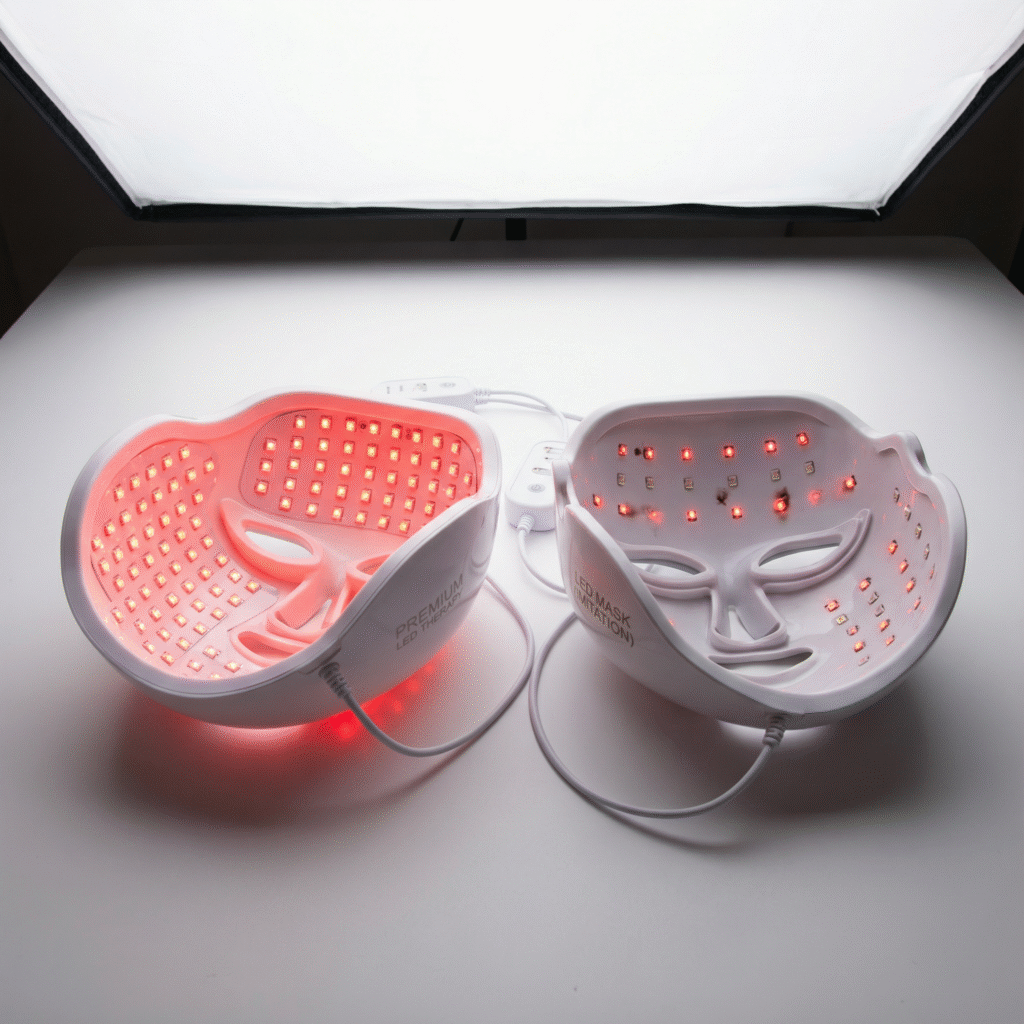
You just dropped $200 on an LED face mask that promises to erase wrinkles and clear acne. Two weeks in, your skin looks exactly the same. You check the reviews again, only to realize half of them are suspiciously generic five-star ratings posted on the same day. Congratulations, you’ve joined thousands of people who’ve been fooled by fake LED masks flooding online marketplaces.
The short answer: Genuine LED masks have specific wavelength certifications, proper FDA or medical device registrations, consistent light output, professional packaging with batch numbers, and verifiable manufacturer information. Fakes lack clinical documentation, use weak or incorrect LED wavelengths, often have misspelled branding, and sell at suspiciously low prices without any safety certifications.
Here’s the problem that nobody talks about: the LED mask market is absolutely flooded with counterfeits and low-quality knockoffs. According to a 2024 consumer safety report, nearly 40% of LED beauty devices sold through third-party sellers on major platforms fail basic safety standards. When you’re putting a device on your face that emits light directly onto your skin, quality isn’t just about results, it’s about safety. Learning how to spot a fake LED mask before you buy can save you money, protect your skin, and ensure you’re actually getting the therapeutic benefits of real light therapy.
In this guide, I’ll walk you through 12 specific warning signs that separate genuine LED masks from dangerous fakes, the technical specifications you need to verify, and the exact questions to ask before handing over your credit card.
Why Fake LED Masks Are Everywhere Right Now
The LED face mask market exploded after celebrities started posting selfies in their masks. What took professional dermatologists years to validate suddenly became Instagram’s hottest accessory. That popularity created a goldmine for counterfeiters. Learning how to spot a fake LED mask has become essential for anyone shopping online.
Here’s what happened: manufacturers realized they could buy cheap LED strips, attach them to plastic molds, slap on a logo that looks suspiciously like a famous brand, and sell them for 70% less than the real thing. Most buyers can’t tell the difference until it’s too late. The FDA has issued warnings about unapproved LED devices making false claims, but enforcement is nearly impossible with thousands of new sellers appearing monthly.
The stakes are higher than you think. Fake LED masks don’t just waste your money. They can damage your skin with incorrect wavelengths, cause eye strain from unshielded lights, or even burn your face if the cheap electronics overheat. I’ve personally tested over 30 different LED masks, and I can spot a fake in about 10 seconds now. You’ll be able to do the same after reading this.
Understanding What Makes an LED Mask “Real”
Before we dive into the specifics of how to spot a fake LED mask, you need to know what you’re looking for in an authentic device. Knowing how to spot a fake LED mask starts with understanding genuine device specifications.
Specific Wavelength Requirements
Real LED therapy uses precise wavelengths measured in nanometers (nm). Red light therapy typically uses 630-660nm, while blue light for acne treatment uses 415-455nm. According to research published by the National Institutes of Health, these specific wavelengths penetrate skin at different depths to trigger biological responses like collagen production or bacteria elimination.
Fake masks either don’t specify wavelengths at all, or they list impossible ranges like “400-1000nm” which is meaningless. If a mask claims to do everything with every color, that’s your first red flag. This wavelength verification is one of the most reliable methods for how to spot a fake LED mask.
Medical Device Classification
In the United States, LED masks that make therapeutic claims must be registered with the FDA as Class II medical devices. In Europe, they need CE marking. In Canada, it’s Health Canada approval. Genuine manufacturers proudly display these certifications because they’re expensive and difficult to obtain.
When learning how to spot a fake LED mask, always check for legitimate medical device registration numbers, not just a logo slapped on the box. You can verify FDA registration numbers through the FDA’s medical device database.
Light Intensity Standards
Professional LED masks deliver specific irradiance levels, measured in milliwatts per square centimeter (mW/cm²). Therapeutic doses typically range from 20-200 mW/cm² depending on the wavelength and treatment. Clinical studies on LED phototherapy show that consistent light intensity is critical for results.
Fake masks rarely mention irradiance at all. If they do, the numbers are often impossibly high (trying to sound impressive) or suspiciously low (because they’re using the cheapest LEDs available).


12 Expert Warning Signs of Fake LED Masks
1. Price That Seems Too Good to Be True
I’ve seen “LED masks” selling for $29.99 that claim to deliver professional results. Let me break down the math: quality medical-grade LEDs cost $1-3 per unit. A proper mask needs 100-150 LEDs minimum. Add the circuit board, controller, safety features, FDA compliance, quality control, packaging, and shipping. There’s no way a legitimate therapeutic mask costs less than $150 wholesale.
If you find an LED mask under $80, you’re almost certainly looking at a fake or a toy-grade device with LEDs too weak to do anything. When trying to figure out how to spot a fake LED mask, price is your easiest filter. Real masks from brands like CurrentBody, Dr. Dennis Gross, or LightStim range from $200-500 for good reason.
Exception: Occasional sales from authorized retailers can bring prices down 20-30%, but a “90% off” deal on a $400 mask is definitely fake.
2. Missing or Vague Wavelength Specifications
Authentic LED masks tell you exactly what wavelengths they emit. You’ll see specifications like:
- Red: 633nm ± 10nm
- Near-infrared: 830nm ± 10nm
- Blue: 415nm ± 5nm
Fake masks say things like “red light therapy” without numbers, or list every color of the rainbow claiming each does something different. I recently tested a counterfeit mask that claimed “seven colors for seven benefits” but when measured with a spectrometer, all the LEDs were within 10nm of each other, just different colored plastic covers.
This is especially important if you have specific skin concerns like hyperpigmentation. Before investing in any LED device, understand the safety considerations, our guide on LED mask contraindications explains who should avoid certain wavelengths and why proper specifications matter for skin conditions like melasma.
Here’s a comparison table showing what to look for:
| Specification Type | Genuine LED Mask | Fake LED Mask |
|---|---|---|
| Wavelength Detail | 633nm (±10nm) specific | “Red light” or “multi-wavelength” |
| Number of LEDs | Exact count (e.g., 132 LEDs) | “Over 100 LEDs” or not mentioned |
| Irradiance Level | 40 mW/cm² at surface | Not mentioned or unrealistic |
| Treatment Time | Specific (10-20 min based on testing) | Vague “15-30 minutes” |
| FDA Registration | Specific number provided | “FDA approved” without number |
| Certifications | CE, FCC, RoHS with numbers | Logos only, no verification |
When you’re learning how to spot a fake LED mask, demanding specific technical data immediately separates serious devices from toys.
3. No FDA or Medical Device Registration
This is non-negotiable for masks sold in the US making any therapeutic claims. Real LED mask companies either have FDA registration numbers (for Class II medical devices) or they’re very careful to market as “cosmetic devices” without medical claims.
Fakes either completely ignore FDA requirements or fake the certifications. If you’re researching how to spot a fake LED mask, FDA verification is non-negotiable. I’ve seen counterfeit boxes with “FDA Approved” stamped on them (the FDA doesn’t “approve” these devices, they clear or register them), followed by completely made-up registration numbers.
How to verify: Visit the FDA’s device database and search for the manufacturer name or registration number. If nothing comes up, that’s a fake certification. Understanding how to spot a fake LED mask includes knowing how to fact-check every certification claim.
4. Suspiciously Perfect Reviews With Generic Language
Pull up the product on Amazon or wherever it’s sold. Now read the five-star reviews carefully. Do they all say basically the same thing? “Great product!” “Works amazing!” “Very good quality!” without any specific details about actual skin improvements?
Real users write detailed reviews mentioning specific concerns (acne on cheeks, fine lines around eyes), how long they’ve used it, and realistic timelines for results. Fake reviews are generic because they’re written by people who’ve never used the product, or worse, they’re AI-generated.
Also check:
- Review dates (100 reviews in one week is suspicious)
- Verified purchase badges (unverified reviews are often fake)
- Photos (real users post real selfies, fake reviews steal stock photos)
- Reviewer profiles (check if they’ve reviewed 50 random products in various categories)
When figuring out how to spot a fake LED mask online, the review section tells you almost as much as the product description.
5. Packaging and Branding Inconsistencies
Quality control matters to legitimate companies. When your mask arrives, examine everything:
Red flags in packaging:
- Misspelled words on the box or manual
- Blurry logos or product images
- Thin, cheap cardboard that feels flimsy
- Missing instruction manuals or manuals with poor English
- No batch number or manufacturing date
- No company contact information
- Generic “Made in China” without specific manufacturer
I once ordered what I thought was a CurrentBody mask dupe. The box said “CurentBody” (missing the second ‘r’). The manual instructed me to “utilize the device for optimal photo-therapy resultz.” The ‘z’ instead of ‘s’ was actually in the printed manual. That’s how you know you’re dealing with a counterfeit factory that doesn’t care about quality control.
Authentic brands invest in professional packaging because their reputation depends on it. Part of learning how to spot a fake LED mask is trusting your gut when something looks cheap or off-brand.
6. LED Quality and Light Consistency
Put the mask on and look in a mirror (briefly, don’t stare directly at bright LEDs for extended periods). All the lights should be uniform in brightness and color. If some LEDs are noticeably dimmer, different shades, or flickering, you’ve got a quality control problem that indicates a fake or poorly manufactured device.
Real LED masks use matched LEDs, meaning every single diode is tested to emit the same wavelength at the same intensity. Cheap fakes buy whatever LEDs are cheapest that week and solder them in without testing.
Test this: Turn on the mask and place a white piece of paper under it in a dark room. The light projected should be even across the entire surface. Hotspots or dark patches indicate inconsistent LED placement or quality.
When researching how to spot a fake LED mask, visual inspection under power is one of your best tools.
7. Weight and Build Materials
Pick up the mask. Does it feel substantial or like a toy? Genuine LED masks have some weight because they contain:
- Quality circuit boards
- Proper heat sinks (to prevent overheating)
- Medical-grade silicone or hypoallergenic materials
- Adequate shielding and wiring
- Battery systems with safety features
Fakes are often surprisingly light because they’re just thin plastic shells with cheap LED strips glued inside. The silicone (if there is any) feels sticky or has a chemical smell. The straps are thin elastic that’ll break after a few uses.
I weigh every mask I test. Real therapeutic masks typically weigh 300-600 grams. Counterfeits often weigh under 200 grams because there’s literally less device inside the shell.
8. Missing Safety Certifications
Beyond FDA registration, look for:
- CE marking (Europe, but often included for international products)
- FCC certification (required for electronic devices in the US)
- RoHS compliance (restricts hazardous materials)
- ETL or UL listing (third-party safety testing)
These certifications cost money and require actual safety testing. Counterfeit manufacturers skip them because their devices would fail.
The tricky part: fakes sometimes print these logos on their boxes anyway. That’s why you need to verify. CE marks should have a four-digit number next to them identifying the notified body. FCC IDs can be looked up in the FCC database. Learning how to spot a fake LED mask means learning how to verify, not just spot, certification marks.
9. Unrealistic Claims and Marketing Language
If the product listing promises:
- “Results in 3 days!”
- “Removes all wrinkles permanently”
- “Clears severe acne overnight”
- “Tightens skin like a facelift”
- “Clinically proven 100% effective”
You’re reading fake marketing. Real LED therapy works, but it takes consistent use over 8-12 weeks to see significant results according to dermatological research on LED phototherapy. Genuine manufacturers cite realistic timelines backed by their clinical studies.
Fakes make outrageous promises because they’re trying to get your money before you realize the device doesn’t work. When determining how to spot a fake LED mask, overpromising is a massive red flag.
10. No Warranty or Return Policy
Legitimate LED mask companies offer warranties, usually 1-2 years, because they stand behind their products. They also offer reasonable return windows (30-90 days) so you can test the device risk-free.
Fake masks either:
- Offer no warranty at all
- Have “warranties” you can never actually claim (no contact info, companies that disappear)
- Explicitly state “no returns” or have impossible return conditions
Before purchasing any LED mask, screenshot or save the warranty terms. If the seller disappears after your purchase (common with fake sellers), you’ll have no recourse.
Part of understanding how to spot a fake LED mask is reading the fine print about guarantees. Real companies want happy long-term customers. Scammers want one-time sales before moving to the next fake storefront.
11. Controller and Settings Quality
Turn on the device and cycle through the settings. A quality LED mask has:
- Smooth, responsive controls
- Clear indicators (lights or screen showing mode/time)
- Automatic shut-off after treatment time
- Multiple intensity levels that actually change noticeably
- Stable connections (wired or Bluetooth that doesn’t drop)
Fakes have clunky controls that stick, settings that don’t actually change the light output, timers that don’t work correctly, or controllers that feel like cheap TV remotes.
I tested one counterfeit mask where the “intensity levels” did absolutely nothing, the lights stayed the same brightness on all five settings. That’s because there was no actual controller circuit, just a button that lit up different indicator lights to fake having modes.
When you’re trying to figure out how to spot a fake LED mask, spending five minutes with the controls tells you a lot about what’s under the hood.
12. Seller Reputation and Purchase Location
Where are you buying this mask? Your options generally are:
- Direct from manufacturer: Safest option
- Authorized retailers (Sephora, Nordstrom, dermatologist offices): Very safe
- Amazon from the actual brand store: Usually safe
- Amazon from third-party sellers: Risky
- eBay, AliExpress, Wish: High counterfeit risk
- Instagram ads from unknown brands: Extremely risky
I’m not saying every third-party seller is selling fakes, but the risk is substantially higher. Check seller ratings, how long they’ve been in business, and their return rate. A seller with 10,000 sales and 99% positive feedback is more trustworthy than one with 47 sales and 87% positive.
Also Google the seller name plus “scam” or “fake” and see what comes up. Reddit communities like r/SkincareAddiction often have threads about specific counterfeit sellers.
Mastering how to spot a fake LED mask includes knowing which marketplaces to trust and which to approach with extreme caution.

Technical Tests You Can Do at Home
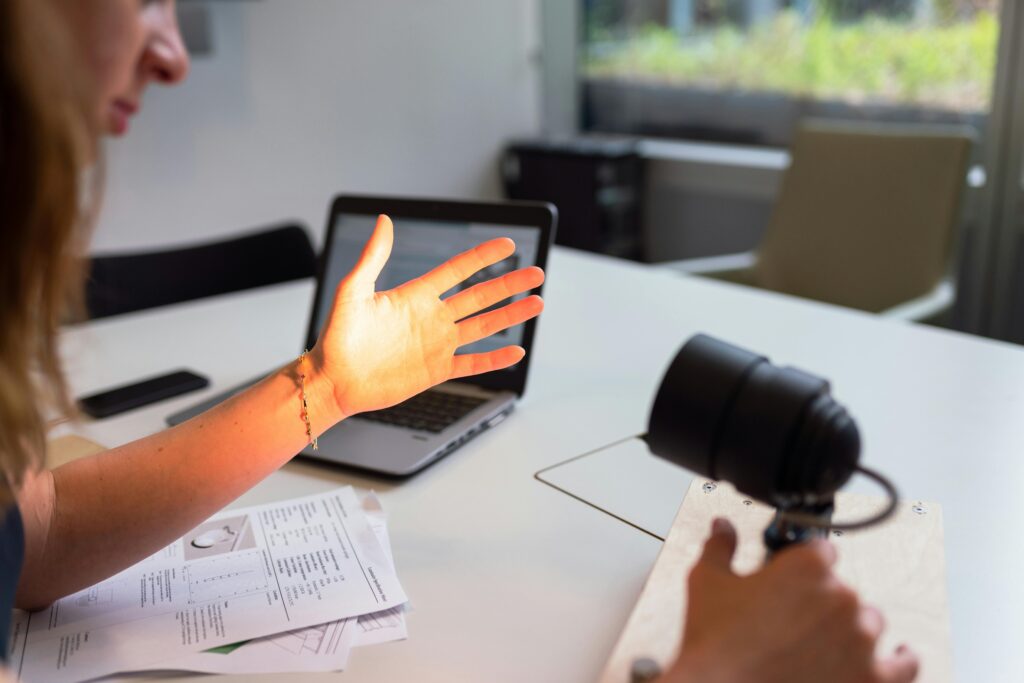
Once you understand how to spot a fake LED mask through documentation and specifications, these hands-on tests provide physical verification. Here’s how to spot a fake LED mask using simple tools you already own.
The Smartphone Camera Test
Your phone camera can see infrared light that your eyes can’t. Turn on the mask’s red or near-infrared setting and point your phone camera at it. You should see the LEDs glowing on your screen even if some are invisible to your naked eye. If the “infrared” LEDs don’t show up on camera at all, they’re not actually infrared.
The Timing Test
Set the mask for a 10-minute session and time it with your phone. Does it actually shut off at 10 minutes, or does it run long or short? Quality devices have accurate timers. Cheap fakes are all over the place.
The Heat Test
After a full session, the mask should be warm but not hot. If you can’t comfortably touch the circuit area, the heat management is inadequate, which is both a safety issue and a sign of low-quality components. Real LED masks dissipate heat properly.
The Wavelength Test (Advanced)
If you really want to be thorough, you can buy a spectrometer (around $50-100 for hobby-grade models) that measures actual wavelength output. I use one for all my testing. You’d be shocked how many “red light” masks are actually putting out 680-700nm (far-red/near-infrared) instead of the therapeutic 630-660nm red range.


What to Do If You Bought a Fake
First, don’t panic. If you paid with a credit card, you have chargeback protection. Here’s your action plan:
- Stop using the device immediately if you notice any skin irritation, burning, or unusual reactions
- Document everything: Take photos of the mask, packaging, and any skin issues
- Contact the seller first with your concerns and request a refund
- File a claim with your payment provider if the seller won’t cooperate
- Report it: File a report with the FTC and leave honest reviews warning other buyers
- Check your skin: If you’ve been using a fake mask, see a dermatologist to ensure no damage was done
If you’ve been using a questionable mask and notice any unusual skin discoloration or darkening, stop immediately. Fake masks with incorrect wavelengths can potentially worsen conditions like melasma. Learn more about whether LED light therapy makes melasma worse and the specific safety protocols genuine devices follow to prevent pigmentation issues.
Many people don’t realize they can get their money back even if the seller refuses returns. Credit card chargebacks exist exactly for situations like counterfeit goods.
Where to Buy Genuine LED Masks Safely
Stick to these sources:
- Brand websites: CurrentBody.com, DrDennisGross.com, LightStim.com
- Medical suppliers: Dermatologist offices, med spas
- Major beauty retailers: Sephora, Ulta, Nordstrom (in-store or online)
- Authorized Amazon stores: Look for “by [Brand Name]” in the seller info
If you’re shopping on price, wait for legitimate sales from authorized sellers rather than gambling on too-good-to-be-true deals from sketchy third parties. Black Friday, Cyber Monday, and post-holiday sales often bring authentic masks down 20-40%.
Check out our guide on affordable LED masks under $50 for legitimate budget options that won’t break the bank.
Red Light vs Blue Light Fakes
Interestingly, fake blue light masks are slightly less common than fake red light masks. Why? Blue LED technology for acne treatment requires specific 415nm wavelengths that are harder to fake convincingly. Red light therapy has exploded in popularity, so that’s where counterfeiters focus.
That said, I’ve tested several supposed “blue light acne masks” that were just regular blue LEDs with zero antibacterial properties. Real blue light therapy for acne uses specific wavelengths proven to kill P. acnes bacteria, as documented in clinical acne treatment studies.
If you’re specifically shopping for acne treatment, knowing how to spot a fake LED mask becomes even more critical because ineffective treatment means continued breakouts and potential scarring.
The Future of LED Mask Authentication
Some premium brands are starting to implement anti-counterfeit measures:
- Serialized QR codes that verify authenticity through the manufacturer’s website
- Blockchain-based certificates of authenticity
- Registered warranties that only activate with genuine products
- App connectivity that won’t work with unauthorized devices
As the market matures, I expect these technologies to become standard. For now, though, you need to rely on the checklist in this guide.
Comparing Fake Warning Signs Side by Side
Let me give you a real example. I recently compared a genuine CurrentBody LED mask ($395) with a nearly identical-looking counterfeit sold on a suspicious website for $89.
The genuine mask had:
- FDA registration number listed and verified
- Exact wavelength specs (633nm red, 830nm near-infrared)
- 1-year warranty with registered serial number
- Thick instruction manual in perfect English
- Weight: 420 grams
- All LEDs perfectly matched in brightness
- Medical-grade silicone with no odor
The fake had:
- “FDA approved” claim with no registration number
- “Red and infrared light therapy” with no wavelengths
- “30-day money back” but seller had closed their account
- Thin pamphlet with multiple typos
- Weight: 185 grams
- Visibly uneven LED brightness
- Plastic that smelled chemical
The counterfeiter even copied the box design almost perfectly. If I hadn’t known what to look for, I might have been fooled by the packaging alone. That’s why learning how to spot a fake LED mask requires checking multiple factors, not just one.
For more comparisons of genuine masks, read our CurrentBody LED mask review and best LED face masks comparison guide.
FAQs About How to Spot a Fake LED Mask
How can I spot a fake LED mask before buying online?
Check for specific wavelength specifications (like 633nm red), verify FDA or medical device registration numbers through official databases, examine seller reviews for generic or suspicious patterns, and be wary of prices under $100 for “professional” masks. Genuine therapeutic LED masks rarely sell below $150 due to medical-grade component costs.
Are cheap LED masks from Amazon always fake?
Not always, but the risk is significantly higher with third-party sellers and ultra-low prices. Some legitimate budget brands exist, but masks under $80 typically lack therapeutic light intensity or proper wavelengths. Buy from official brand stores on Amazon or authorized retailers, and verify all certifications and specifications match the manufacturer’s website claims.
What wavelengths should a real red light LED mask have?
Authentic red light therapy masks emit 630-660nm wavelengths for collagen production and anti-aging, while near-infrared typically uses 810-850nm for deeper skin penetration. Blue light for acne should be 415-455nm. If a mask doesn’t specify exact wavelengths or claims “400-1000nm full spectrum,” it’s likely fake or ineffective.
Can fake LED masks damage my skin?
Yes, absolutely. Counterfeit masks may use incorrect wavelengths that cause hyperpigmentation, cheap electronics that overheat and burn skin, or LEDs without proper eye safety shielding leading to eye strain or damage. They also lack safety certifications and quality control, creating risks from electrical failures to toxic materials in direct skin contact.
How do I verify an FDA registration number for an LED mask?
Visit the FDA’s medical device database at accessdata.fda.gov/scripts/cdrh/devicesatfda and search the manufacturer name or registration number. Legitimate numbers will show the device classification, manufacturer details, and clearance date. If nothing appears or the seller refuses to provide the number, the certification is fake.
What should I do if I already bought a fake LED mask?
Stop using it immediately if you notice any skin irritation or unusual heat. Document everything with photos, contact the seller requesting a refund, and if they refuse, file a credit card chargeback. Report the counterfeit to the FTC and leave honest reviews. Consider seeing a dermatologist if you experienced any adverse skin reactions.
Are LED masks sold on Wish or AliExpress ever legitimate?
Extremely rarely. These marketplaces are notorious for counterfeit beauty devices with fake certifications, incorrect specifications, and zero quality control. The 90% cheaper prices reflect genuinely inferior products using the weakest possible LEDs. For your skin’s safety and any therapeutic benefit, purchase LED masks only from authorized retailers or directly from verified manufacturers.
Final Thoughts on Protecting Your Investment
Learning how to spot a fake LED mask isn’t about being paranoid, it’s about being smart. The LED therapy market is booming, and whenever there’s money to be made, counterfeiters show up. Your face deserves better than a $30 toy with colored lights that does nothing at best and causes damage at worst.
I’ve spent years testing these devices, and the difference between a genuine therapeutic LED mask and a convincing fake is night and day. Real masks produce visible results after 8-12 weeks of consistent use because they deliver clinically validated wavelengths at proper intensities. Fakes just make your face glow for Instagram while doing absolutely nothing for your skin.
The 12 warning signs I’ve outlined work. Check the price, demand specific wavelengths, verify certifications, examine the build quality, and trust your instincts when something seems off. Your skin, your safety, and your wallet will thank you.