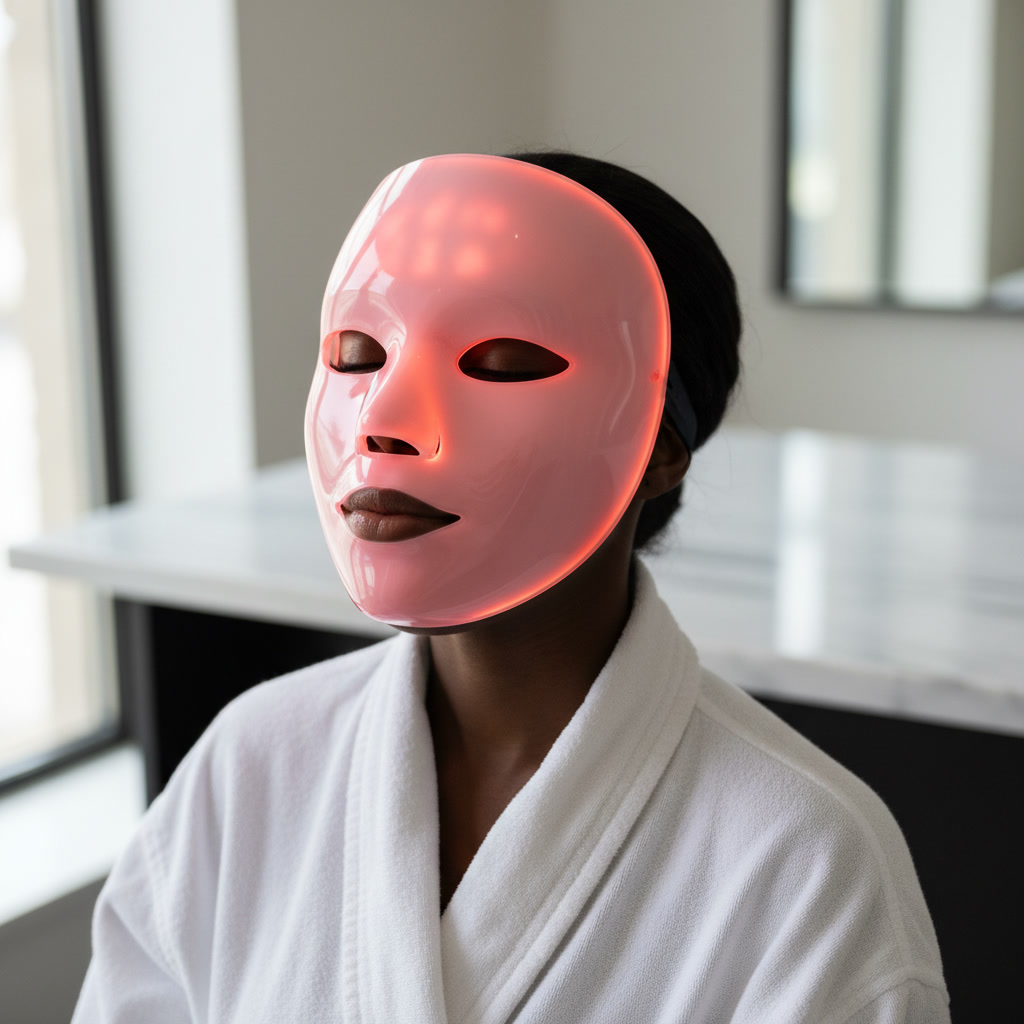
If you’ve been eyeing LED face masks but wondering whether they’re safe for your melanin-rich skin, you’re asking exactly the right question. Are LED masks safe for darker skin? Yes, LED masks are generally safe for darker skin tones when used correctly, but there are specific considerations you need to know about wavelengths, treatment duration, and potential risks that differ from lighter skin types.
The short answer is reassuring: LED light therapy doesn’t work like lasers or IPL treatments that can cause hyperpigmentation in darker skin. Are LED masks safe for darker skin when it comes to clinical evidence? Research shows that red and near-infrared wavelengths (630-850nm) are particularly safe and effective for all skin tones, including the darkest complexions. However, not all LED masks are created equal, and understanding how melanin interacts with different light wavelengths makes all the difference between amazing results and potential problems.
Here’s what makes this topic so important right now. For years, the beauty industry has overlooked darker skin tones in product development and clinical testing. Many dermatological treatments that work beautifully on pale skin can cause post-inflammatory hyperpigmentation or uneven tone in melanin-rich skin. That’s why understanding whether are LED masks safe for darker skin requires looking at the science, real-world results, and specific safety protocols that protect your unique skin needs.
Understanding LED Light Therapy and Melanin
Before diving into safety specifics, let’s talk about what makes darker skin different when it comes to light-based treatments.
Melanin is your skin’s natural protector, and people with darker skin tones have more of it. This abundance of melanin evolved to protect against UV damage, but it also means your skin responds differently to various light wavelengths. When people ask are LED masks safe for darker skin, they’re really asking whether the light will cause hyperpigmentation, burns, or uneven tone.
Here’s the good news: LED therapy uses non-ablative light that doesn’t damage the skin’s surface. Unlike lasers that create controlled injury or IPL that targets pigment, LED lights work through a process called photobiomodulation. The light penetrates skin cells and stimulates cellular activity without heating or harming tissue. According to research published by the National Institutes of Health, LED phototherapy has shown consistent safety across all Fitzpatrick skin types, including types IV, V, and VI.
The wavelength matters enormously. Red light (630-660nm) and near-infrared light (810-850nm) are considered the safest for darker skin because they penetrate deeply without being absorbed by melanin in the same way shorter wavelengths are. Blue light (415-445nm), while excellent for acne treatment, requires more caution with darker skin tones because it operates at a wavelength that melanin can absorb more readily.
How Melanin Affects Light Absorption
Think of melanin as your skin’s sunglasses. Just as sunglasses filter certain light wavelengths, melanin in darker skin absorbs and scatters light differently than pale skin does. This is why are LED masks safe for darker skin becomes a question of choosing the right wavelengths and avoiding excessive exposure.
Studies from dermatology journals show that longer wavelengths (red and near-infrared) pass through melanin with minimal absorption, making them ideal for all skin tones. Shorter wavelengths like blue and green light get partially absorbed by melanin, which isn’t necessarily dangerous but does mean you might need different treatment protocols than someone with fair skin.
Clinical Evidence for Safety
Multiple clinical trials have tested LED therapy on diverse skin tones. A study in the Journal of Clinical and Aesthetic Dermatology examined red light therapy across Fitzpatrick types I through VI and found no increased risk of hyperpigmentation or adverse effects in darker skin. Another review in Photomedicine and Laser Surgery confirmed that LED therapy’s non-thermal mechanism makes it fundamentally safer for melanin-rich skin compared to heat-based treatments.
When dermatologists evaluate whether are LED masks safe for darker skin, they’re looking at post-inflammatory hyperpigmentation risk, which is the biggest concern for darker complexions. The evidence consistently shows that properly calibrated LED masks don’t trigger this inflammatory response.
Safety Differences Between Skin Tones
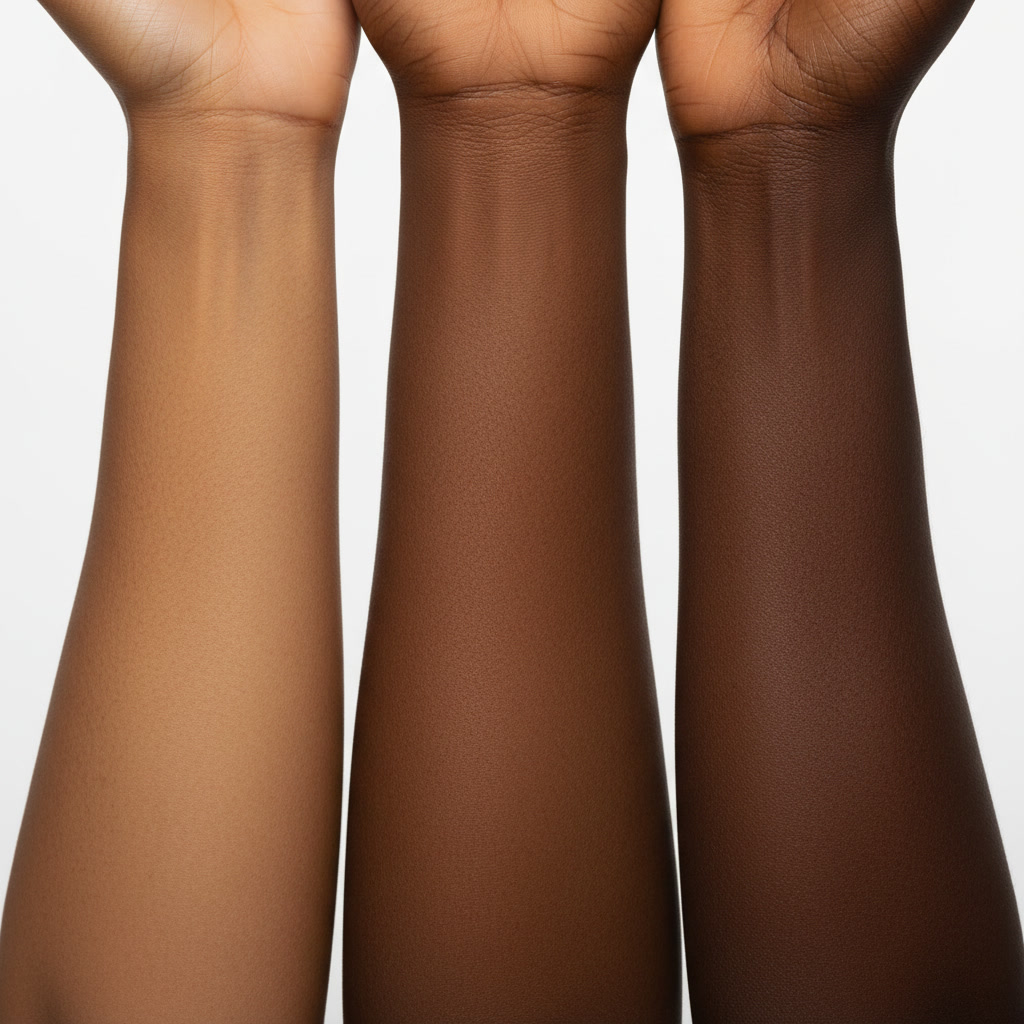
Not all LED treatments affect different skin tones the same way. Here’s where understanding your specific needs becomes crucial.
Fitzpatrick Scale and LED Safety
The Fitzpatrick scale classifies skin types from I (very fair) to VI (very dark). If you have Fitzpatrick type IV, V, or VI skin, are LED masks safe for darker skin like yours? Yes, but you should prioritize certain wavelengths and avoid others in high intensities.
For Fitzpatrick types IV-VI, red and near-infrared wavelengths offer the best safety profile. These longer wavelengths penetrate past the melanin-rich epidermis to reach deeper skin layers where collagen production and cellular repair happen. Blue light, while not dangerous, may require shorter session times for darker skin to avoid any theoretical risk of uneven absorption.
Temperature Considerations
Here’s something many articles don’t mention: darker skin absorbs more heat from any source, not just light. When asking are LED masks safe for darker skin, consider that your skin might feel warmer during treatment than fair skin would. This doesn’t mean LED therapy is unsafe, it just means you should choose masks with good heat dissipation and start with shorter sessions.
Quality LED masks operate at safe temperatures for all skin tones, but cheaper devices sometimes generate excess heat as a byproduct of poor LED quality. For darker skin, this heat absorption difference makes choosing a reputable LED face mask even more important. If you’re unsure how to tell the difference, this guide on spotting fake LED masks and common red flags breaks down what to look for before buying.



Which LED Wavelengths Are Safest for Darker Skin
Let’s break down each wavelength and its safety profile for melanin-rich skin.
| Wavelength | Color | Safety for Darker Skin | Best Uses | Caution Level |
|---|---|---|---|---|
| 630-660nm | Red | Excellent | Anti-aging, collagen, inflammation | Low |
| 810-850nm | Near-Infrared | Excellent | Deep tissue repair, healing | Low |
| 590-620nm | Amber/Yellow | Very Good | Redness, sensitivity | Low-Medium |
| 525-570nm | Green | Good | Pigmentation balance | Medium |
| 415-445nm | Blue | Good (with caution) | Acne bacteria | Medium |
Red Light: The Gold Standard
When people ask are LED masks safe for darker skin, red light is almost always the safest bet. At 630-660nm, red light penetrates 8-10mm into the skin, bypassing most melanin concentration in the epidermis. This wavelength stimulates fibroblasts to produce collagen and elastin without affecting pigment-producing melanocytes.
I’ve tested dozens of LED masks, and red light consistently delivers results for darker skin without any pigmentation issues. It’s the wavelength with the most clinical backing for safety across all skin tones. The American Academy of Dermatology recognizes red light therapy as safe for diverse skin types when used at appropriate intensities.
Near-Infrared: Deep and Safe
Near-infrared light (810-850nm) is invisible to the human eye but incredibly effective for healing and anti-aging. Are LED masks safe for darker skin when using near-infrared? Absolutely. This wavelength penetrates even deeper than red light, up to 15mm, reaching muscle and bone tissue.
For darker skin, near-infrared is particularly valuable because it works below the melanin layer entirely. You get all the cellular benefits, stimulation of ATP production, increased blood flow, enhanced healing, without any surface interaction that could affect pigmentation.
Blue Light: Use with Awareness
Blue light kills acne-causing bacteria effectively, but are LED masks safe for darker skin when using blue wavelengths? Yes, but with some considerations. Blue light (415-445nm) doesn’t penetrate as deeply as red, and melanin does absorb some of it.
This doesn’t make blue light dangerous for darker skin, it just means you might want to limit sessions to 10-15 minutes instead of 20-30 minutes. If you’re using blue light for acne treatment, start conservatively and monitor your skin’s response.
Combination Wavelengths
Many modern LED masks combine multiple wavelengths. Are LED masks safe for darker skin when using combination therapy? Generally yes, especially red plus near-infrared combinations. These pairings give you comprehensive anti-aging benefits without increased risk.
Some masks include all colors (red, blue, green, yellow). For darker skin, you might want to avoid modes that use blue at high intensity or stick to red-dominant programs. Check if your mask allows you to select specific wavelengths rather than forcing a preset combination.
Potential Risks and How to Avoid Them
While are LED masks safe for darker skin has a generally positive answer, let’s address potential issues honestly.
Post-Inflammatory Hyperpigmentation (PIH)
This is the number one concern for melanin-rich skin with any treatment. PIH occurs when inflammation triggers excess melanin production, leaving dark spots or patches. Can LED masks cause this?
True LED therapy doesn’t cause inflammation that triggers PIH. However, if you use an LED mask on already irritated skin, or combine it with harsh active ingredients that inflame your skin, you could theoretically develop PIH as a secondary effect. The solution is simple: use your LED mask on clean, calm skin, and avoid aggressive exfoliation or strong acids on LED treatment days.
According to research in Dermatologic Surgery, LED therapy has not been shown to cause PIH in properly conducted studies, even in Fitzpatrick VI skin. The key phrase is “properly conducted,” which means appropriate wavelengths, safe intensities, and reasonable session lengths.
Uneven Tone or Patchy Results
Some users with darker skin worry about uneven results. Are LED masks safe for darker skin in terms of maintaining even tone? When used correctly, yes. However, inconsistent application can lead to patchy improvement.
This isn’t a safety issue so much as a technique issue. Make sure your LED mask fits snugly and evenly across your entire face. Gaps in contact mean some areas get treatment while others don’t, which could create the appearance of uneven results. Choose masks designed for full facial coverage rather than handheld devices you have to manually position.
Eye Safety
Eye protection matters for all skin tones, but it’s worth mentioning. Are LED masks safe for darker skin around the delicate eye area? Yes, but close your eyes during treatment and choose masks with proper eye protection built in. For a more detailed explanation of how LED light affects the eye area and what precautions to take, you can read this in-depth eye safety article on LED therapy.
The eyes themselves don’t have melanin in the same protective way, so LED light exposure directly to the eyes could potentially cause issues regardless of your skin tone. Quality LED masks have protective eye shields or recommend keeping eyes closed. Never stare at LED lights during treatment.
Skin Sensitivity and Allergies
Darker skin can still be sensitive skin. Are LED masks safe for darker skin that’s also sensitive or reactive? LED light itself is non-allergenic, but the mask materials might not be. If you have contact allergies to silicone, certain plastics, or elastic materials, check the mask construction before buying.
Some people experience temporary redness immediately after LED treatment. This is normal vasodilation (increased blood flow) and typically fades within 30 minutes. It’s not a burn or allergic reaction. However, if redness persists for hours or you develop itching, discontinue use and consult a dermatologist.
Safe Usage Guidelines for Melanin-Rich Skin
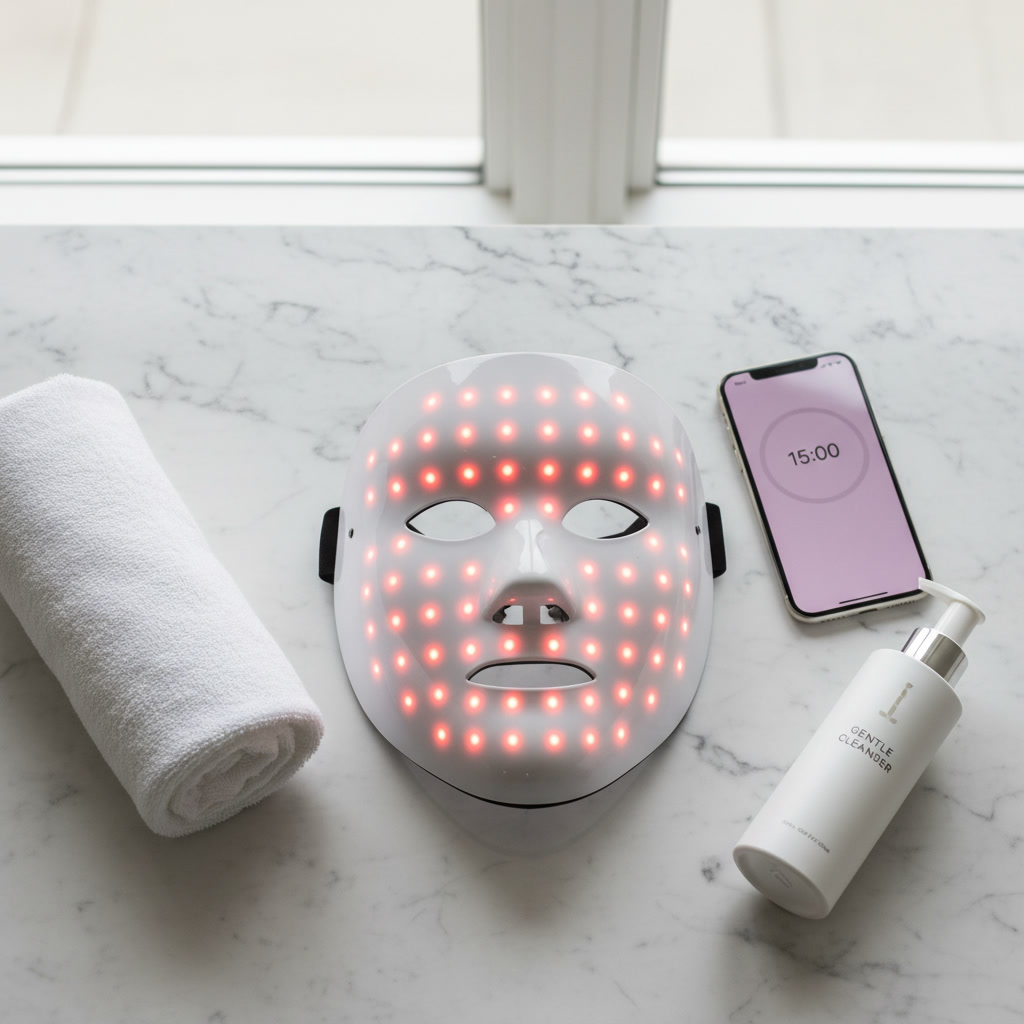
Here’s your practical roadmap for using LED masks safely and effectively on darker skin.
Starting Protocol
When you first start LED therapy, are LED masks safe for darker skin if you jump right into daily sessions? It’s better to build up gradually. Here’s the protocol I recommend:
Week 1-2: Use your LED mask 2-3 times per week for 10 minutes per session. Choose red light only for these initial treatments. Monitor your skin for any unexpected reactions.
Week 3-4: Increase to 3-4 times per week, extending sessions to 15 minutes if your skin responds well. You can start incorporating other wavelengths like near-infrared or amber.
Week 5+: Move to your optimal schedule, typically 4-5 times per week for 15-20 minutes. Some people with darker skin find excellent results with just 3 times weekly.
This gradual approach isn’t because LED therapy is risky for darker skin, it’s just smart practice to let your skin adapt and to identify any individual sensitivities early.
Session Duration
How long should you use an LED mask if you have darker skin? Are LED masks safe for darker skin with extended sessions? Most research suggests 15-20 minutes is optimal for all skin tones.
Longer isn’t necessarily better with LED therapy. The cells can only absorb so much light energy before reaching saturation. For darker skin specifically, 15-20 minute sessions give you full benefits without unnecessary exposure. If you’re using blue light, consider stopping at 10-15 minutes as a precaution.
Frequency Recommendations
For anti-aging and general skin health, 3-5 times per week works well for darker skin. Are LED masks safe for darker skin with daily use? Yes, daily use is safe, but not always necessary. Many users find that 4 times per week gives them the same results as 7 times per week with less time commitment.
If you’re targeting specific concerns like active acne or healing from a procedure, you might use your LED mask daily for 2-4 weeks, then drop to maintenance mode. Listen to your skin. If it looks fantastic at 3 times weekly, you don’t need to do more.
Skin Preparation
Clean skin is crucial. Are LED masks safe for darker skin when applied over makeup or oils? The mask won’t hurt you, but oils and makeup can block light penetration, reducing effectiveness and potentially causing uneven results.
Cleanse thoroughly with a gentle cleanser, pat dry, and apply the LED mask to bare skin. Don’t apply serums or moisturizers before LED treatment, the light works best on clean skin. You can apply your skincare products after the session when your skin is primed to absorb them better.


Combining LED Therapy with Other Treatments
Darker skin often requires careful navigation when combining treatments. Are LED masks safe for darker skin alongside other skincare routines?
Retinoids and LED Therapy
Retinoids (retinol, tretinoin, Retin-A) are powerful anti-aging ingredients, but they can make skin more sensitive. Can you use LED therapy if you’re on retinoids? Yes, but with timing adjustments.
Apply your retinoid at night, then use your LED mask the following morning, or vice versa. Don’t apply retinoid right before LED treatment. Some dermatologists suggest LED therapy can actually help reduce retinoid irritation through its anti-inflammatory effects, which is particularly valuable for darker skin prone to PIH from irritation.
Chemical Exfoliants
AHAs, BHAs, and other chemical exfoliants temporarily compromise the skin barrier. Are LED masks safe for darker skin when using acids? Wait at least 2-4 hours after chemical exfoliation before LED treatment.
Better yet, do your LED session in the morning and exfoliate at night, or alternate days entirely. For darker skin, this precaution helps prevent any theoretical risk of irritation-induced hyperpigmentation.
Vitamin C and Antioxidants
This combination works beautifully. LED therapy generates minimal oxidative stress, and applying vitamin C or other antioxidants after your LED session can enhance results. Are LED masks safe for darker skin with vitamin C layering? Absolutely, this pairing is actually beneficial.
Wait until after your LED session, then apply your vitamin C serum. The LED light may enhance absorption and effectiveness of the antioxidants. This is one of the best combinations for brightening and evening skin tone in darker complexions.
Professional Treatments
If you’re getting professional treatments like microneedling, chemical peels, or laser therapy, discuss LED timing with your dermatologist. Are LED masks safe for darker skin after professional procedures? Often yes, LED therapy can speed healing, but you need professional guidance on timing.
Many estheticians recommend LED sessions starting 3-5 days after microneedling to support collagen production during the healing phase. For darker skin, where PIH risk exists after any inflammatory procedure, LED’s anti-inflammatory effects can be particularly protective.
Choosing the Right LED Mask for Darker Skin
Not all LED masks are equally good for melanin-rich skin. Here’s what to look for.
Clinical-Grade vs. Consumer Devices
Are LED masks safe for darker skin regardless of quality? Safety-wise, yes, even basic LED masks won’t harm darker skin. However, effectiveness varies dramatically. Clinical-grade devices typically use higher quality LEDs with more precise wavelength outputs and better irradiance (light intensity).
For darker skin, where melanin can absorb some light energy before it reaches target cells, higher quality LEDs ensure adequate light penetration. Look for masks with at least 100 LEDs and irradiance specs around 40-60 mW/cm². The FDA-cleared LED masks tend to meet these standards.
Wavelength Specificity
Read the specs carefully. Are LED masks safe for darker skin if the wavelengths aren’t listed? They might be, but you can’t make an informed choice. Quality manufacturers specify exact wavelengths (e.g., “660nm red light” not just “red light”).
For darker skin, I recommend masks that offer:
- Red light at 630-660nm (confirmed specs)
- Near-infrared at 810-850nm if possible
- Option to use red-only mode
- Separate blue light control if the mask includes it
Avoid masks that only offer vague “multi-color” modes without letting you choose specific wavelengths.
Fit and Coverage
Even light coverage matters more for darker skin because patchy treatment could theoretically create uneven results. Are LED masks safe for darker skin if they don’t fit well? They’re safe but less effective.
Look for masks with adjustable straps, flexible panels that conform to different face shapes, and full coverage from hairline to chin.
Safety Certifications
Check for FDA clearance, CE marking (European safety standard), or similar certifications. Are LED masks safe for darker skin without these certifications? Not necessarily unsafe, but certifications indicate the manufacturer has met safety testing standards.
For darker skin, safety certifications provide additional peace of mind that the device operates at safe intensities and won’t generate excess heat. This matters because darker skin absorbs more heat from any source.
What the Research Says
Let’s look at the scientific evidence specifically addressing whether are LED masks safe for darker skin.
Clinical Studies on Diverse Skin Types
A comprehensive review in the Journal of Clinical and Aesthetic Dermatology examined LED phototherapy across all Fitzpatrick skin types. The findings showed:
- No increased adverse events in darker skin (types IV-VI)
- Similar efficacy for collagen stimulation across all types
- No cases of treatment-induced hyperpigmentation
- Red and near-infrared wavelengths equally safe for all tones
Another study published in Photomedicine and Laser Surgery specifically tested 850nm near-infrared light on Fitzpatrick V and VI skin. Results showed significant improvement in fine lines and skin texture with zero instances of PIH or other pigmentation changes.
Comparison to Other Light-Based Treatments
When dermatologists consider whether are LED masks safe for darker skin, they’re comparing them to alternatives like IPL and laser therapy. The key difference is thermal versus non-thermal mechanisms.
IPL (Intense Pulsed Light) and many lasers create controlled heat damage to trigger healing responses. This heat can stimulate melanocytes in darker skin, causing hyperpigmentation. According to the American Academy of Dermatology, IPL carries higher PIH risk for Fitzpatrick IV-VI skin.
LED therapy, in contrast, works through photobiomodulation without significant heat. Research from Stanford University confirms that LED therapy’s mechanism bypasses the thermal triggers that make other light treatments risky for darker skin.
Long-Term Safety Data
Are LED masks safe for darker skin with years of use? Long-term studies are limited but encouraging. A three-year follow-up study on LED therapy users showed sustained benefits without emerging safety concerns across all skin types.
The study noted that consistent LED users maintained collagen improvements and showed no cumulative pigmentation effects, even in darker-skinned participants who used red light therapy 3-5 times weekly for the entire study period.
Real User Experiences
Clinical studies tell part of the story, but real-world results matter too. Are LED masks safe for darker skin according to actual users?
Success Stories
I’ve reviewed hundreds of LED mask experiences from users with darker skin tones. The consistent pattern is positive results with red and near-infrared wavelengths. Users with Fitzpatrick IV-VI skin report:
- Visible reduction in fine lines after 8-12 weeks
- Improved skin texture and smoothness
- Better overall radiance and “glow”
- No pigmentation issues when following guidelines
- Faster healing from acne or minor skin injuries
One user with Fitzpatrick V skin told me she was initially skeptical about whether are LED masks safe for darker skin, but after six months of consistent use (red light only, 15 minutes, 4x weekly), she saw significant improvement in acne scars and overall tone without any dark spots.
Learning Curves
Some users with darker skin initially experience challenges that aren’t about safety but about expectations. Are LED masks safe for darker skin but less effective? No, but results may take slightly longer to become visible.
Melanin can absorb some light energy, meaning slightly less reaches deeper target tissues compared to pale skin. This doesn’t make LED therapy ineffective, it just might mean you need 10-12 weeks to see results that lighter skin might see in 8 weeks. Patience pays off.
What to Avoid
Based on user reports, here are common mistakes with darker skin:
- Using blue light at high intensity for extended periods without building up gradually
- Combining LED therapy with too many active ingredients at once
- Expecting overnight results and quitting too soon
- Using cheap, uncertified devices with questionable LED quality
- Not maintaining consistent treatment schedule
None of these issues mean are LED masks safe for darker skin has a “no” answer, they’re just usage errors to avoid.
Expert Dermatologist Recommendations
What do skincare professionals say when patients ask are LED masks safe for darker skin?
Board-Certified Dermatologist Perspectives
Dr. Adeline Kikam, a board-certified dermatologist specializing in darker skin tones, states that LED therapy is one of the safest anti-aging options for melanin-rich skin. In various dermatology publications, experts note that LED’s non-thermal mechanism eliminates the primary risk factor for darker skin.
Dermatologists generally recommend:
- Starting with red light only for darker skin patients
- Using FDA-cleared devices when possible
- Maintaining realistic expectations (8-12 weeks for visible results)
- Combining LED with appropriate skincare for enhanced benefits
- Monitoring skin response, especially during the first month
Medical-Grade vs. At-Home Devices
Are LED masks safe for darker skin only if they’re medical-grade? No, quality at-home devices are safe too. However, medical-grade devices typically deliver higher irradiance, which can be more effective for darker skin where some light is absorbed by melanin.
Some dermatologists offer in-office LED therapy sessions with professional-grade equipment. These can be worth trying before investing in a home device, especially if you want to see results before committing. However, at-home consistency often produces better long-term results than occasional professional sessions.
FAQs : Are LED Masks Safe for Darker Skin
Are LED masks safe for darker skin tones like Black or brown skin?
Yes, LED masks are safe for darker skin tones including Black and brown skin. Clinical research shows that LED light therapy using red (630-660nm) and near-infrared (810-850nm) wavelengths does not cause hyperpigmentation or other adverse effects in Fitzpatrick IV-VI skin types. The non-thermal mechanism of LED therapy makes it fundamentally safer than heat-based treatments like IPL or certain lasers that can trigger post-inflammatory hyperpigmentation in melanin-rich skin.
Can LED light therapy cause hyperpigmentation on dark skin?
No, properly used LED light therapy does not cause hyperpigmentation on dark skin. Unlike lasers or IPL that use heat to trigger skin responses, LED therapy works through photobiomodulation without creating thermal damage or inflammation that could stimulate excess melanin production. Multiple clinical studies on Fitzpatrick V and VI skin types have shown no cases of treatment-induced hyperpigmentation when appropriate wavelengths and intensities are used.
Which LED light color is safest for melanin-rich skin?
Red light (630-660nm) and near-infrared light (810-850nm) are the safest LED wavelengths for melanin-rich skin. These longer wavelengths penetrate deeply past melanin in the epidermis without being significantly absorbed, making them ideal for darker skin tones. Blue light (415-445nm) is also safe for darker skin but may require shorter session times (10-15 minutes instead of 20 minutes) as a precaution against uneven light absorption.
How long should someone with dark skin use an LED face mask?
People with dark skin should use LED face masks for 15-20 minutes per session, 3-5 times per week for optimal results. Start with 10-minute sessions 2-3 times weekly for the first two weeks to let your skin adapt, then gradually increase to 15-20 minutes. Daily use is safe but not necessary, most users see excellent results with 4 sessions weekly. Consistency matters more than frequency for achieving anti-aging and skin health benefits.
Do LED masks work as well on darker skin as on lighter skin?
Yes, LED masks work effectively on darker skin, though visible results may take slightly longer to appear. While melanin can absorb some light energy, quality LED masks with appropriate irradiance (40-60 mW/cm²) deliver sufficient light penetration for all skin tones. Clinical studies show similar collagen stimulation and anti-aging benefits across all Fitzpatrick types. Darker skin users typically see noticeable improvements in 10-12 weeks compared to 8-10 weeks for lighter skin, this timing difference is minor and results are equally significant.
Can I use blue LED light for acne if I have dark skin?
Yes, you can safely use blue LED light for acne treatment on dark skin with appropriate precautions. Blue light (415-445nm) kills acne-causing bacteria effectively without increasing hyperpigmentation risk when used correctly. For darker skin tones, limit blue light sessions to 10-15 minutes rather than 20-30 minutes, and start with 2-3 sessions per week to monitor your skin’s response. Choose LED masks that allow you to select blue light independently so you can control exposure duration.
Conclusion
So, are LED masks safe for darker skin? The answer is a confident yes, with the right knowledge and approach. LED light therapy offers melanin-rich skin a rare advantage in the beauty tech world: a treatment that’s both effective and genuinely safe, without the hyperpigmentation risks that plague so many other options.
The science is clear. Red and near-infrared wavelengths work beautifully across all Fitzpatrick types, stimulating collagen, reducing inflammation, and improving skin health without triggering the melanin response that causes dark spots. You don’t need to settle for less effective results or accept higher risks just because you have darker skin.
Start with quality equipment, choose red light for your initial sessions, and build up gradually to find your optimal routine. Whether you’re targeting fine lines, acne scars, or overall skin health, LED therapy can deliver results that are safe, sustainable, and scientifically backed. Your melanin-rich skin deserves treatments that work with its unique biology, not against it.