You’ve burned your hair one too many times. That sizzling sound when your straightener hits damp sections, the smell of singed protein, the brittle ends that snap off no matter how much conditioner you use. Traditional hair straighteners run at 400-450°F, and while they work fast, they’re literally cooking your hair every single day.
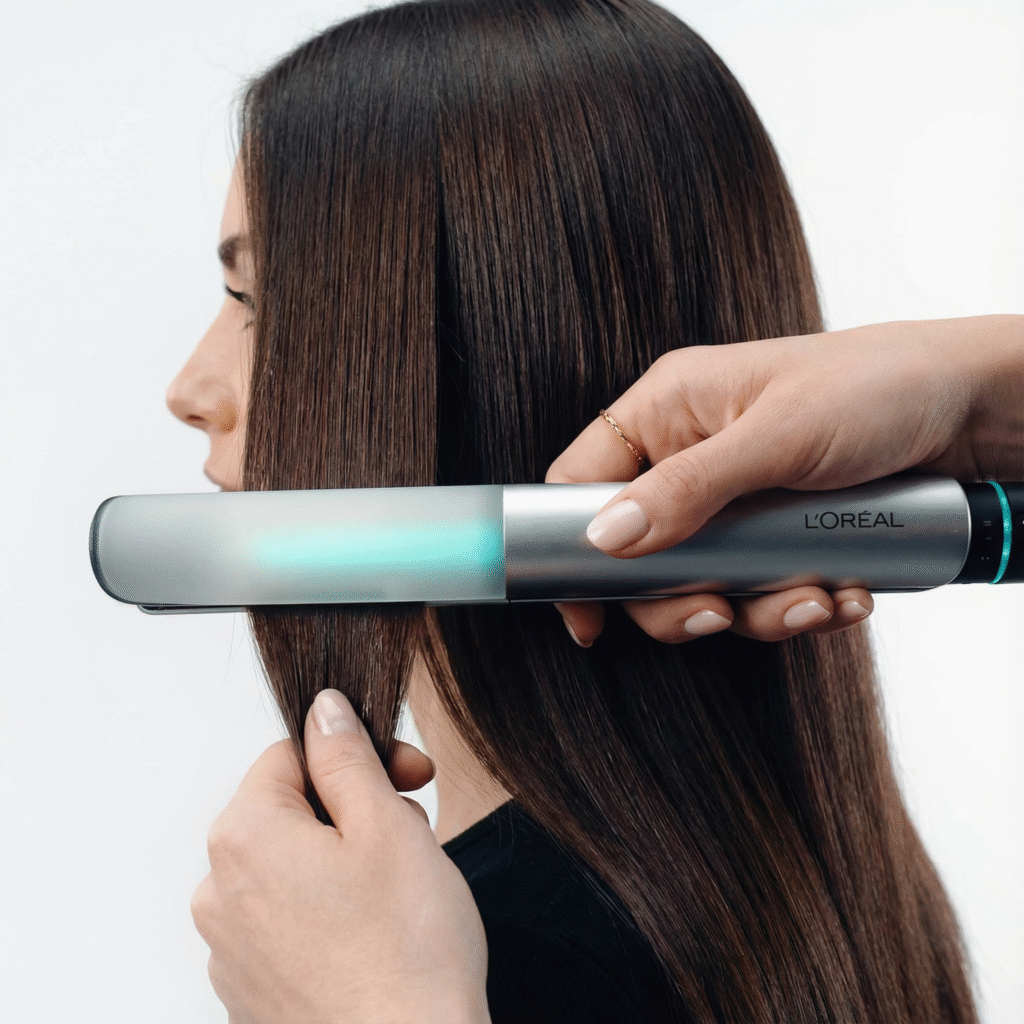
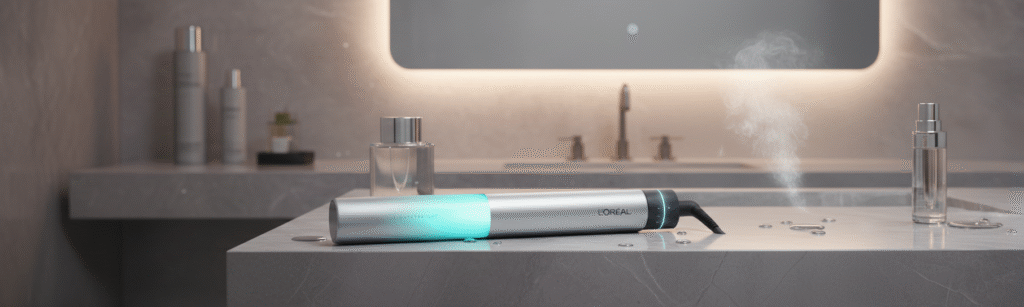
What if you could straighten your hair at 320°F and actually get faster results? That’s exactly what the L’Oréal infrared hair straightener unveiled at CES 2026 promises. This isn’t just another flat iron with a lower heat setting. It uses infrared light technology, the same science behind LED face masks, to fundamentally change how heat styling works.
The L’Oréal infrared hair straightener, officially called the Light Straight + Multi-styler, won a CES 2026 Innovation Award for good reason. In this article, you’ll discover how infrared light technology works for hair, why 320°F beats 400°F, what makes this different from traditional straighteners, when you can buy it, and whether this crossover between LED beauty tech and hair tools is worth the wait.
Why the L’Oréal Infrared Hair Straightener Announcement Matters
If you’ve been following beauty technology trends, you’ve probably noticed LED therapy devices everywhere. LED face masks for anti-aging, red light panels for skin health, blue light wands for acne. The technology has proven itself in skincare with solid clinical research backing up the benefits.
Now that same light-based technology is crossing over into hair care. The L’Oréal infrared hair straightener represents the first major consumer device to apply infrared light principles to heat styling. According to L’Oréal’s presentation at CES 2026, the device straightens hair three times faster than premium competitors while operating at significantly lower temperatures.
Here’s why that matters: heat damage is cumulative. Every time you run a 450°F flat iron down your hair shaft, you’re degrading the protein structure, evaporating essential moisture, and weakening the cuticle layer. The American Academy of Dermatology notes that excessive heat styling is one of the primary causes of hair breakage and damage in women who regularly straighten their hair.
The L’Oréal infrared hair straightener aims to solve this fundamental problem by using infrared light to assist the straightening process, allowing for lower temperatures without sacrificing speed or results. For people who straighten their hair daily or multiple times per week, this could mean the difference between healthy hair and damaged, fragile strands.


How Infrared Light Technology Works for Hair
The Science Behind Infrared Heat
Infrared light sits on the electromagnetic spectrum between visible light and microwave radiation. You can’t see it, but you can feel it as heat. What makes infrared special for hair styling is how it delivers that heat.
Traditional flat irons use conductive heat, meaning the hot metal plates directly contact your hair and transfer heat through touch. This creates hot spots, uneven heating, and requires high temperatures to ensure the entire hair shaft gets straightened. It’s an external heating process that can damage the hair cuticle.
The L’Oréal infrared hair straightener uses infrared light that penetrates into the hair shaft, heating from the inside out. This is similar to how a microwave heats food compared to an oven. According to research on infrared heating published in the Journal of Cosmetic Science, infrared radiation can penetrate 2-3mm into materials, which is perfect for hair shaft diameter.
Why 320°F Works Better Than 400°F
Here’s the counterintuitive part: lower temperature plus infrared light equals faster results. The L’Oréal infrared hair straightener operates at 320°F, which is 80-130 degrees cooler than most premium flat irons (which typically run at 400-450°F).
L’Oréal’s internal testing showed that their device straightens hair three times faster than traditional high-heat tools. This happens because infrared light heats the moisture molecules inside your hair shaft directly, causing them to expand and temporarily restructure while the mechanical pressure of the plates sets the straight pattern.
Traditional straighteners rely solely on external heat to slowly penetrate through the cuticle layer to reach the cortex where hair’s structure lives. The L’Oréal infrared hair straightener bypasses this slow conduction process by delivering energy directly where it’s needed.
Think of it like cooking a potato. A conventional oven heats from the outside in, requiring high temperatures and long cooking times. A microwave (which also uses electromagnetic radiation) heats the water molecules throughout the potato simultaneously, cooking it in minutes at lower power. Same principle, different application.
LED Technology Meets Hair Care
If you’re familiar with LED face masks, you already understand the basic principle. LED devices use specific wavelengths of light to trigger biological responses in skin cells. Red light stimulates collagen, blue light kills acne bacteria, near-infrared reduces inflammation.
The L’Oréal infrared hair straightener uses infrared wavelengths specifically tuned for heating hair proteins without degrading them. While L’Oréal hasn’t released the exact wavelength specifications, infrared heating technology for hair typically operates in the far-infrared range (3-15 micrometers).
This crossover between skincare LED technology and hair tools makes sense when you consider that L’Oréal is already developing flexible LED face masks. The company clearly sees light-based technology as a major direction for at-home beauty devices.
The L’Oréal Light Straight + Multi-Styler Features
What Makes It “Multi-Styler”
The L’Oréal infrared hair straightener isn’t just a flat iron. The “Multi-styler” designation suggests it can create multiple looks beyond straight hair. Based on L’Oréal’s CES presentation, the device likely includes:
- Straightening plates for sleek, smooth styles
- Curved or rounded edges for creating waves and curls
- Adjustable temperature settings (though all within the lower 320°F range)
- Quick-change attachments or plate configurations
Many modern styling tools try to do everything, but they often compromise on core performance. The key question for the L’Oréal infrared hair straightener is whether the infrared technology works equally well for curling and waving as it does for straightening.
Expected Technical Specifications
While L’Oréal hasn’t released complete technical details, we can make educated guesses based on the CES announcement and comparable premium devices:
Plate Material: Likely ceramic or tourmaline infused with infrared-emitting materials. These materials naturally emit far-infrared radiation when heated.
Plate Width: Probably 1-1.25 inches, which is standard for versatile styling. Wider plates work better for long, thick hair, while narrower plates offer more precision.
Heat-Up Time: Premium straighteners heat up in 30-60 seconds. Given the infrared efficiency, the L’Oréal infrared hair straightener might heat up even faster.
Auto-Shutoff: Expected safety feature, typically after 30-60 minutes of inactivity.
Cord Length: Professional-grade tools usually have 8-9 foot swivel cords for easy maneuvering.
Weight: Infrared heating elements can sometimes reduce device weight since they don’t require as much internal heating hardware.
The Infrared Advantage Over Traditional Straighteners
The L’Oréal infrared hair straightener offers several advantages beyond just lower temperature:
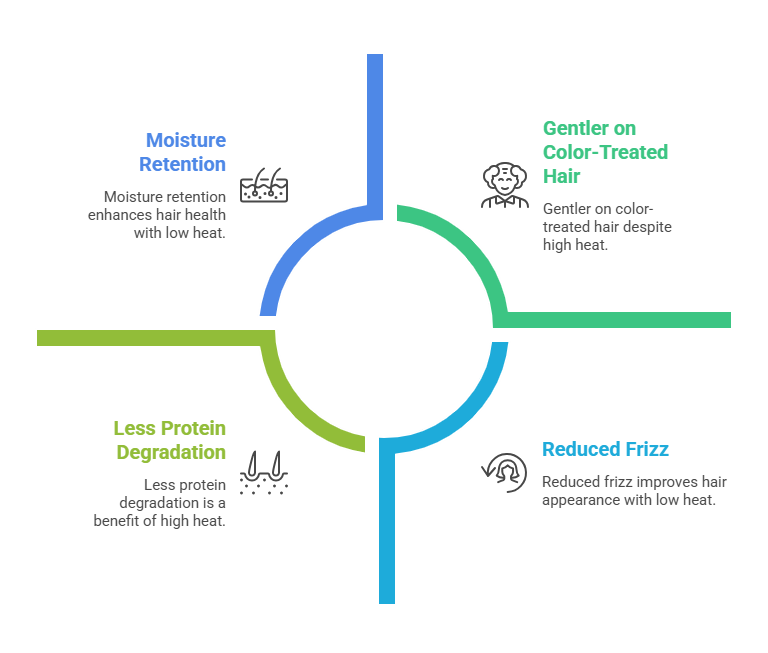
More Even Heat Distribution: Infrared radiation heats the entire width of the plates uniformly, eliminating hot spots that can cause damage.
Moisture Retention: Lower temperatures mean less moisture evaporation from the hair shaft. Your hair retains more of its natural hydration, leading to shinier, healthier-looking results.
Reduced Frizz: Because infrared heat doesn’t rough up the cuticle layer as much as traditional conductive heat, you get smoother results with less flyaway frizz.
Gentler on Color-Treated Hair: High heat accelerates color fading. The 320°F operating temperature of the L’Oréal infrared hair straightener should help color last longer between touch-ups.
Less Protein Degradation: Hair is made of keratin protein. Excessive heat causes these proteins to break down and lose structure. Lower temperatures preserve protein integrity better over time.
L’Oréal Infrared Hair Straightener vs Traditional Flat Irons
Temperature Comparison
Traditional Flat Irons:
- Operating Temperature: 400-450°F (some go up to 475°F)
- Heat Type: Conductive (metal-to-hair contact)
- Speed: One pass on fine hair, 2-3 passes on thick hair
- Damage Risk: High with daily use
L’Oréal Infrared Hair Straightener:
- Operating Temperature: 320°F
- Heat Type: Infrared radiation + conductive
- Speed: 3X faster than traditional (per L’Oréal claims)
- Damage Risk: Reduced due to lower temperature
The temperature difference is significant. Every 50-degree reduction in heat exposure can dramatically decrease cumulative damage over months and years of daily styling.
Speed and Efficiency
This is where the L’Oréal infrared hair straightener claims really stand out. Three times faster than premium competitors is a bold assertion. If true, it means:
- Shoulder-length hair could be straightened in 5-7 minutes instead of 15-20 minutes
- You’d spend less total time exposing your hair to heat
- Morning routines become significantly faster
- Less electricity consumption per styling session
The speed advantage comes from infrared light penetrating the hair shaft and heating from within, rather than relying solely on external heat to slowly conduct inward.
Long-Term Hair Health Impact
Here’s the real test: how does your hair look after three months of daily use? Six months? A year?
Traditional high-heat straighteners progressively damage hair structure. You might not notice after a week, but after months of daily 450°F exposure, you’ll see split ends, breakage, dullness, and texture changes.
The L’Oréal infrared hair straightener operating at 320°F should theoretically cause less cumulative damage. However, we won’t know for sure until the device launches and users report long-term results. Early adopters in 2027 will be the real test subjects.
Price Point Positioning
L’Oréal hasn’t announced pricing for the L’Oréal infrared hair straightener, but we can estimate based on market positioning:
Premium Traditional Straighteners:
- GHD Platinum+: $250-$300
- Dyson Corrale: $500
- T3 Lucea: $200-$250
Expected L’Oréal Pricing:
- Likely $250-$400 range
- Positioned as premium but more accessible than Dyson
- Innovation justifies higher price than standard tools
The infrared technology and CES Innovation Award give L’Oréal justification for premium pricing, but they’ll need to stay competitive with established brands like GHD and Chi.
The Connection Between LED Face Masks and Infrared Hair Tools
If you’re reading this on GlowMaskHub.com, you’re probably already familiar with LED face masks and light therapy for skin. The L’Oréal infrared hair straightener uses remarkably similar principles adapted for a different purpose.
Shared Technology Principles
LED Face Masks use specific wavelengths of light (typically red 630-660nm, near-infrared 830-850nm) to penetrate skin and trigger cellular responses. The light energy is absorbed by chromophores (light-sensitive molecules) in your cells, which then convert it into cellular energy for processes like collagen production.
Infrared Hair Straightener uses far-infrared wavelengths (much longer than near-infrared) to heat water molecules inside hair shafts. While the biological mechanism is different, the core principle is the same: light energy penetrates into tissue/material and causes a desired change.
Both technologies offer “gentler” alternatives to traditional approaches. LED masks provide anti-aging benefits without invasive procedures. The L’Oréal infrared hair straightener provides styling results without extreme heat damage.
Why Beauty Tech is Converging
L’Oréal’s move into infrared hair tools while simultaneously developing flexible LED face masks isn’t coincidental. The beauty technology industry is converging around light-based therapies for several reasons:
Consumer Familiarity: People increasingly understand that LED and light therapies work. The education barrier is lower than it was five years ago.
Proven Efficacy: Clinical research supports light-based treatments for various applications. Consumers trust technology backed by science.
At-Home Convenience: Professional treatments are expensive. At-home devices that deliver similar results appeal to cost-conscious consumers.
Gentler Alternatives: Modern consumers want effective treatments that don’t damage skin or hair. Light-based technologies align with this “clean beauty” trend.
If you already own an LED face mask or red light therapy panel, the L’Oréal infrared hair straightener fits naturally into your beauty tech ecosystem. Same scientific foundation, different application.
Cross-Shopping Opportunities
Here’s something interesting: people who invest in premium beauty technology tend to buy across categories. If you spent $400 on a CurrentBody LED face mask, you’re probably willing to spend $300 on an innovative hair straightener.
L’Oréal is smart to position the L’Oréal infrared hair straightener at the intersection of hair care and beauty tech. They’re appealing to the same audience that drives LED mask sales: informed consumers who value innovation, are willing to pay for quality, and care about long-term results over quick fixes.


When Can You Buy the L’Oréal Infrared Hair Straightener?
2027 Launch Timeline
L’Oréal announced the L’Oréal infrared hair straightener at CES 2026 (January 6-9) with an expected launch in 2027. That’s the same timeline as their flexible LED face mask, suggesting L’Oréal is rolling out multiple light-based beauty devices simultaneously.
CES announcements typically precede market launches by 12-18 months for consumer electronics. This gives companies time to finalize manufacturing, complete safety certifications, develop marketing campaigns, and build distribution channels.
For the L’Oréal infrared hair straightener, expect:
Early 2027: Possible launch in France or select European markets Mid 2027: U.S. market availability through L’Oréal direct channels Late 2027: Wider retail distribution (Sephora, Ulta, department stores)
Where It Will Be Sold
The L’Oréal infrared hair straightener will likely be available through:
- L’Oréal’s Official Website: Direct-to-consumer with full product information and customer support
- Sephora: L’Oréal has strong relationships with Sephora for premium beauty tech
- Ulta Beauty: Major beauty retailer carrying hair tools and devices
- Professional Salon Suppliers: If L’Oréal positions this for professional use as well
- Amazon: Eventually, though possibly not at initial launch
Premium pricing and innovation positioning suggest L’Oréal will control distribution carefully at launch, starting with channels that can properly educate consumers about the infrared technology.
Pre-Order Strategy
When luxury beauty devices launch, early adopters often get special pricing or bonuses. If you’re interested in the L’Oréal infrared hair straightener, consider:
Sign Up for L’Oréal Emails: Get notified when pre-orders open Follow Beauty Tech News: Sites that cover CES announcements will report launch dates Check GlowMaskHub.com: We’ll update with launch information as it becomes available Join Beauty Tech Communities: Reddit’s r/beauty tech and similar forums share launch details
Pre-ordering might save you 10-20% off retail price, plus you’ll be among the first to receive the device and could potentially participate in L’Oréal’s review/feedback programs.
Should You Wait for the L’Oréal Infrared Hair Straightener?
If You Have Fine, Color-Treated, or Damaged Hair
This is probably the strongest use case. Fine hair and previously damaged hair are most susceptible to heat damage. If you’re currently using a 450°F straightener daily and your hair is showing signs of damage, the L’Oréal infrared hair straightener could make a significant difference.
Color-treated hair fades faster with high heat exposure. The lower 320°F temperature should help preserve color vibrancy longer, potentially extending time between salon visits.
If You Straighten Your Hair Daily
Cumulative damage is the real enemy. If you straighten 5-7 days per week, you’re exposing your hair to extreme heat 260-365 times per year. The difference between 320°F and 450°F exposure adds up dramatically over time.
Daily users will likely see the most dramatic long-term benefits from the L’Oréal infrared hair straightener. Your hair health after a year of use could be noticeably better than with traditional tools.
If You’re Already Into Beauty Tech
If you own LED face masks, red light panels, or other light therapy devices, the L’Oréal infrared hair straightener is a natural addition to your routine. You already understand and trust light-based technology.
The crossover appeal is strong. The same science that powers your LED anti-aging mask now applied to hair care. It’s consistent with a tech-forward beauty approach.
If You’re Budget-Conscious
Here’s the reality: the L’Oréal infrared hair straightener will probably cost $250-$400. If budget is tight, that’s a significant investment, especially when quality traditional straighteners can be found for $50-$150.
However, consider the opportunity cost. If you’re currently replacing cheap straighteners every 6-12 months and dealing with heat damage that requires expensive treatments, the L’Oréal infrared hair straightener might actually save money long-term.
Also factor in hair health costs. Damaged hair requires more conditioning treatments, salon services, and potentially even haircuts to remove irreparable damage. Preventing damage is cheaper than fixing it.
Alternatives While You Wait for 2027
You don’t need to damage your hair for another year waiting for the L’Oréal infrared hair straightener. Here are current options that minimize heat damage:
Current Lower-Heat Straighteners
Several brands already offer lower-temperature styling, though without the infrared technology:
GHD Platinum+ (185°C/365°F): Uses predictive heat technology to maintain 365°F, which is still hot but lower than many tools. Includes heat sensors that adjust to your hair thickness and styling speed.
T3 Lucea (260-410°F adjustable): Lets you choose lower temperatures if your hair doesn’t need extreme heat. Fine or previously straightened hair often works well at 300-320°F.
HSI Professional (240-450°F adjustable): Budget-friendly option with wide temperature range. You can manually set it to 320°F to approximate the L’Oréal infrared hair straightener temperature.
Heat Protectant Products
If you’re using traditional straighteners until 2027, never skip heat protectant. These products create a barrier between your hair and the hot plates:
Silicone-Based Protectants: Form a coating that shields hair from direct heat contact Protein Treatments: Temporarily strengthen hair structure to resist heat damage Humidity Blockers: Prevent moisture from undoing your straightening work
Quality heat protectants can reduce damage by 50% or more according to cosmetic chemistry research. They’re essential if you’re stuck with high-heat tools for now.
Alternative Styling Methods
Consider heat-free or low-heat alternatives:
Blowout with Round Brush: Blow drying with tension can achieve smooth results at lower temperatures than flat ironing Keratin Treatments: Semi-permanent smoothing that reduces or eliminates need for daily heat styling Brazilian Blowouts: Professional treatment that makes hair naturally straighter for months Overnight Methods: Wrapping damp hair around your head or using foam rollers for gentle straightening
These won’t give you the same results as a straightener, but they’re much gentler on hair health.
The Future of Heat Styling Technology
The L’Oréal infrared hair straightener represents where heat styling is headed: lower temperatures, faster results, and technology-enhanced performance.
What’s Next After Infrared?
If infrared technology proves successful, we’ll likely see:
Ionic + Infrared Combinations: Ionic technology reduces frizz. Combined with infrared heating, you could get ultra-smooth results even faster.
AI Temperature Adjustment: Sensors that analyze your hair type and moisture level, automatically setting optimal temperature.
Connected Smart Straighteners: Devices that track usage, suggest temperature settings based on hair condition, and provide styling tips via smartphone apps.
Multi-Wavelength Light Therapy: Just as LED face masks use multiple wavelengths for different benefits, future hair tools might combine infrared heating with other light wavelengths for conditioning or strengthening.
The Convergence of Skincare and Hair Care Tech
L’Oréal developing both the L’Oréal infrared hair straightener and flexible LED face masks simultaneously signals broader industry trends. Beauty tech is becoming more holistic, with companies applying proven technologies across multiple categories.
Expect to see more crossover:
- LED technology in hair tools (already happening)
- Ultrasonic technology for both skin and hair care
- AI analysis for personalized beauty routines across skin, hair, and makeup
- Subscription models that bundle devices with consumable products
The line between skincare devices and hair tools is blurring, which benefits consumers who want comprehensive beauty tech ecosystems rather than one-off gadgets.
FAQs about L’Oréal infrared hair straightener
How much will the L’Oréal infrared hair straightener cost?
L’Oréal hasn’t announced official pricing for the L’Oréal infrared hair straightener yet. Based on comparable premium hair tools and the innovative infrared technology, expect pricing between $250-$400. The CES Innovation Award and infrared technology justify premium positioning, but L’Oréal will likely price competitively with brands like GHD ($250-$300) and below Dyson ($500).
When does the L’Oréal infrared hair straightener launch?
The L’Oréal infrared hair straightener was announced at CES 2026 (January 6-9) with an expected launch in 2027. L’Oréal hasn’t specified an exact month, but typical CES-to-market timelines suggest early to mid-2027. It will likely launch in Europe first, then expand to U.S. markets 3-6 months later through L’Oréal’s website, Sephora, Ulta, and other premium beauty retailers.
Does the L’Oréal infrared hair straightener work on all hair types?
While L’Oréal hasn’t released complete technical specifications, infrared heating technology should work on all hair types. The L’Oréal infrared hair straightener operates at 320°F, which is effective for fine to medium hair. Thick, coarse, or very curly hair that typically requires higher heat may need multiple passes. The device likely includes adjustable settings to accommodate different hair textures.
Is 320°F hot enough to straighten hair effectively?
Yes, 320°F is sufficient for straightening most hair types. The L’Oréal infrared hair straightener uses infrared light to heat hair from the inside out, which is more efficient than traditional conductive heating. L’Oréal claims it works three times faster than traditional straighteners despite the lower temperature. Fine and medium hair straightens well at 300-350°F, while thick or very curly hair may benefit from higher temperatures.
How does the L’Oréal infrared hair straightener compare to the Dyson Corrale?
The Dyson Corrale uses flexing copper plates and intelligent heat control but still operates at up to 410°F. The L’Oréal infrared hair straightener uses infrared light technology at only 320°F. Both aim to reduce heat damage through innovation, but L’Oréal’s approach focuses on lower temperature plus infrared heating rather than mechanical flexing. Dyson costs around $500, while L’Oréal will likely be $250-$400, making it more accessible.
Can you curl hair with the L’Oréal infrared hair straightener?
Yes, the “Multi-styler” designation indicates the L’Oréal infrared hair straightener can create multiple styles including curls and waves. Most flat irons with rounded or curved edges can be used for curling by wrapping hair around the barrel and sliding down. The infrared heating should work equally well for curling as straightening, though L’Oréal hasn’t demonstrated curling capabilities in their CES presentation.
Can I use the L’Oréal infrared hair straightener on wet hair?
Never use any hair straightener on wet hair, including the L’Oréal infrared hair straightener. Hair is most vulnerable when wet, and applying heat to wet hair causes severe damage as water inside the shaft boils and expands. Always blow dry completely or air dry before using any heat styling tool. The infrared technology doesn’t change this fundamental hair care rule.
The Bottom Line on L’Oréal’s Infrared Innovation
The L’Oréal infrared hair straightener represents genuine innovation in a category that’s been stuck using the same basic technology for decades. By applying infrared light principles from LED beauty devices to hair care, L’Oréal has created something that could fundamentally change how we think about heat styling.
The promise of 320°F styling that works three times faster than 450°F traditional tools is compelling. If L’Oréal delivers on these claims, it could reduce cumulative heat damage for millions of people who straighten their hair regularly.
However, we won’t know for certain until 2027 when real users can test the device long-term. CES Innovation Awards and impressive presentations are one thing. Daily performance over months and years is another.
For now, the L’Oréal infrared hair straightener is worth watching closely. If you’re already into beauty technology and understand LED therapy from using face masks or light panels, this is a natural evolution of that technology applied to a new problem.
Stay tuned to GlowMaskHub for updates as we approach the 2027 launch. We’ll provide hands-on reviews, comparisons with traditional straighteners, and long-term damage assessments once the L’Oréal infrared hair straightener becomes available. The future of heat styling is looking brighter and cooler, literally.