If you’ve ever tried wearing a traditional LED face mask, you know the struggle. They’re bulky, uncomfortable, and feel more like wearing a sci-fi helmet than a skincare treatment. You can’t move around, can’t relax, and honestly, most people give up on them after a few uses because they’re just too inconvenient.
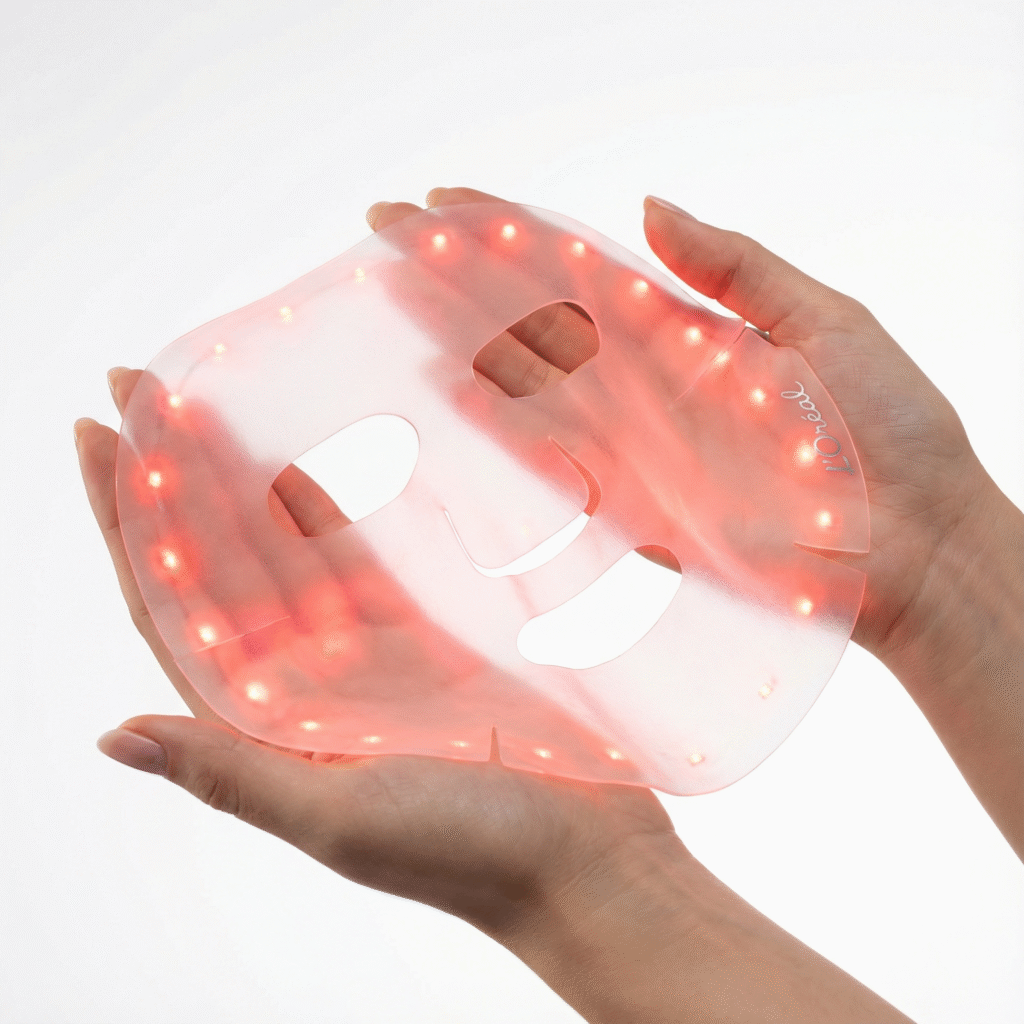
That’s why the L’Oréal LED face mask announcement at CES 2026 caught everyone’s attention. The beauty giant just revealed something that could actually change at-home light therapy forever: an ultra-thin, flexible LED face mask that bends and moves with your face like a sheet mask. No more rigid helmets. No more feeling like you’re trapped in a device.
In this article, you’ll discover everything L’Oréal announced about their revolutionary L’Oréal LED face mask at CES 2026, including the cutting-edge technology behind it, how it compares to current masks on the market, the specific wavelengths it uses, and when you can actually get your hands on one. If you’re tired of uncomfortable LED masks or you’ve been waiting for something better, this is what you need to know.
Why L’Oréal’s CES 2026 Announcement Matters
The LED face mask market has exploded over the past few years, but there’s been a consistent problem: most devices are either powerful but uncomfortable, or comfortable but ineffective. You’ve got the heavy-duty “helmet” style masks that deliver results but feel like torture devices, and then you’ve got lighter options that are more comfortable but don’t have enough LED coverage or power to make a real difference.
According to recent market analysis, the global LED face mask market is projected to grow from $333.63 million in 2025 to $820.17 million by 2033. That’s massive growth, but it also highlights a gap: consumers want effective LED therapy that actually fits into their lives.
L’Oréal identified this exact problem. Their VP of Digital Innovation and Consumer Science stated that current LED masks fall into two categories: high-powered devices that are chunky and uncomfortable, or thinner options that simply don’t work well enough. The L’Oréal LED face mask aims to solve both issues at once.



What Makes the L’Oréal LED Face Mask Different
Ultra-Thin, Flexible Design (Just 1mm Thick)
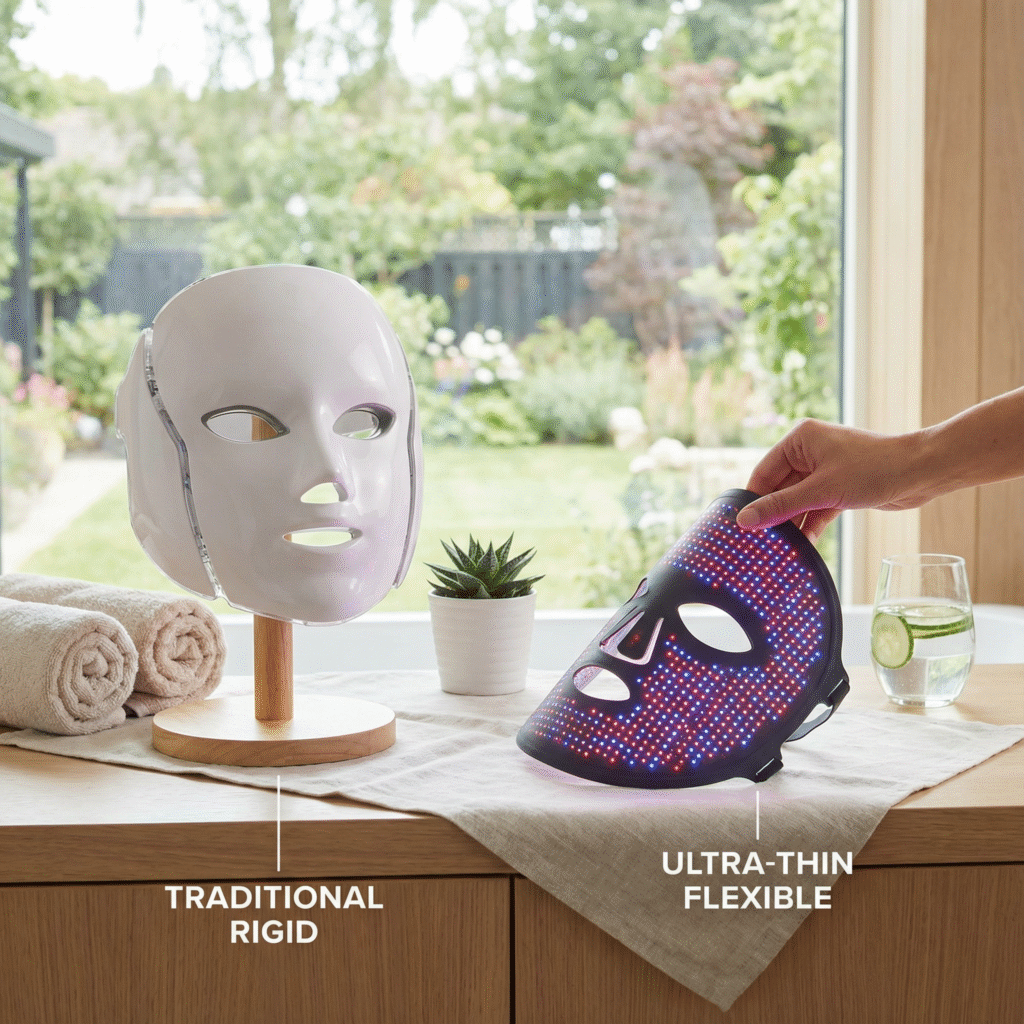
Here’s what sets this apart: the L’Oréal LED face mask is only 1 millimeter thin. That’s thinner than most credit cards. It’s designed to be stretchable and flexible, conforming to your face’s natural contours like a sheet mask rather than forcing your face into a rigid mold.
Think about that for a second. Most LED masks on the market are hard plastic shells that sit away from your skin. This creates uneven light distribution and means you can’t really do anything while wearing them. L’Oréal’s version is designed to actually mold to your unique facial structure, which means better skin contact and more even light delivery across your entire face.
The flexibility also means you could theoretically wear this while doing other things. Reading, watching TV, even moving around your home becomes possible when you’re not locked into a stationary helmet.
Partnership with iSmart Developments
L’Oréal didn’t develop this technology entirely in-house. They partnered with iSmart Developments, a company that specializes in flexible electronics and wearable technology. This collaboration brings together L’Oréal’s skincare science expertise with iSmart’s advanced materials engineering.
The result is a device that uses stretchable LED technology embedded in a soft, skin-safe material. It’s the same kind of innovation you’re seeing in flexible phone screens and wearable health monitors, but applied specifically to LED light therapy for skin.
The Science: 630nm Red Light + 830nm Near-Infrared
Let’s talk wavelengths, because this is where the L’Oréal LED face mask gets really interesting from a results standpoint.
Why These Specific Wavelengths Matter
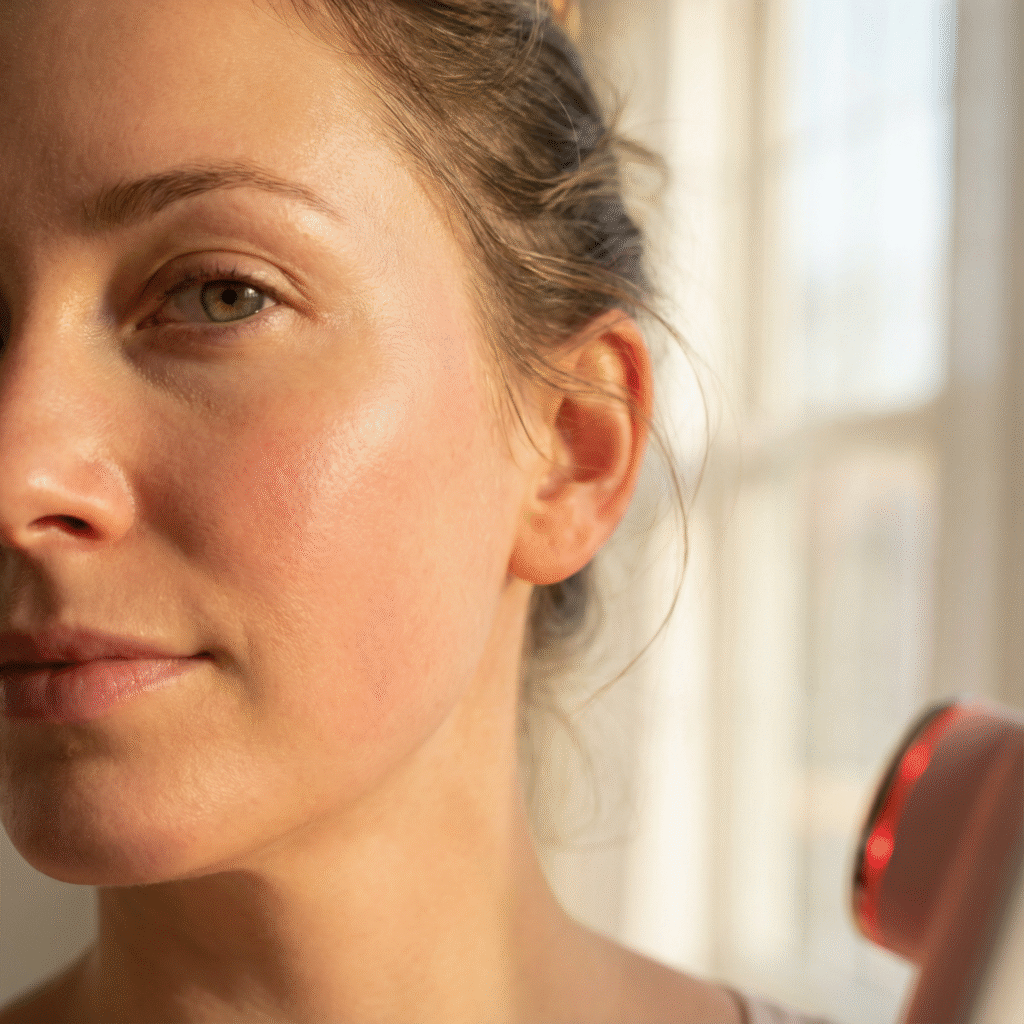
The mask uses two precisely controlled wavelengths: 630nm red light and 830nm near-infrared light. These aren’t random choices. According to L’Oréal’s clinical research team, these are the exact wavelengths that dermatologists recommend for anti-aging treatments.
630nm red light penetrates the skin’s surface layers and stimulates fibroblast activity. In simpler terms, it tells your skin cells to produce more collagen and elastin, the proteins that keep your skin firm and smooth. Clinical studies published by the National Institutes of Health have shown that red light in the 630nm range can improve skin texture, reduce fine lines, and even out skin tone.
830nm near-infrared light goes deeper. While you can’t see near-infrared light with your eyes, it penetrates further into the dermis where it promotes cellular repair and reduces inflammation. This wavelength is particularly effective for improving skin elasticity and reducing deeper wrinkles.
The Dual-Wavelength Advantage
Here’s what most people don’t realize: using both wavelengths together creates a synergistic effect. The red light works on surface-level concerns while the near-infrared light tackles deeper structural issues. You’re essentially treating multiple layers of your skin simultaneously.
Most affordable LED masks only use red and blue light, skipping the near-infrared entirely. Higher-end devices like the CurrentBody LED mask do include near-infrared, but they’re still stuck in that rigid helmet design. The L’Oréal LED face mask combines clinical-grade wavelengths with wearable comfort.
It’s worth noting that according to the American Academy of Dermatology, LED light therapy in these specific wavelengths has been clinically proven to improve skin appearance with consistent use over 8-12 weeks.
How It Compares to Current LED Masks on the Market
Rigid “Helmet” Style Masks
Traditional LED masks like the Dr. Dennis Gross SpectraLite and Omnilux Contour are effective, but they’re essentially hard plastic shells with LEDs mounted inside. They work, but the experience isn’t great.
Pros of traditional masks:
- High LED count (usually 100+ bulbs)
- Proven clinical results
- Consistent light exposure
Cons that L’Oréal’s design solves:
- Heavy and uncomfortable (typically 1-2 pounds)
- Can’t move while wearing
- One-size-fits-all doesn’t actually fit all faces
- Light hits some areas better than others due to gaps
Current “Flexible” Options
There have been attempts at more comfortable LED masks, but most fall short on power. Silicone-based masks or fabric designs with embedded LEDs often don’t have enough bulbs or the right intensity to deliver clinical results.
The L’Oréal LED face mask claims to solve this by maintaining clinical-grade light output while achieving flexibility. That’s the engineering breakthrough here. It’s not just about making it bendable, it’s about making it bendable while still delivering the 630nm and 830nm wavelengths at effective intensities.
What About Eye Masks and Targeted Devices?
Interestingly, LED eye masks have gained popularity recently because they’re more comfortable than full-face devices. But they obviously only treat one area. L’Oréal’s approach gives you full-face coverage without sacrificing comfort, which could make those specialized devices less necessary.


L’Oréal’s Approach to Complementary Skincare
Here’s something else that stood out from the CES 2026 announcement: L’Oréal plans to develop serums specifically formulated to work with their LED mask.
Why Device-Specific Serums Make Sense
Most people don’t think about what they put on their skin before LED therapy, but it actually matters. Some ingredients can interfere with light penetration, while others can enhance the treatment’s effectiveness.
L’Oréal mentioned that their companion serums will be designed to prevent skin from feeling parched during treatment (LED therapy can sometimes be slightly drying) while also boosting the light’s effectiveness. Think hyaluronic acid to maintain hydration, antioxidants to protect against any oxidative stress, and possibly light-enhancing compounds.
This isn’t entirely new. Some estheticians already recommend using specific serums before LED treatments, but L’Oréal creating products specifically calibrated for their device takes it to another level. It’s a more holistic approach to at-home light therapy.
The Bigger Picture: Personalized Beauty Tech
What L’Oréal is really doing here is entering the personalized beauty device space in a serious way. They’re not just selling you a mask, they’re potentially creating an entire ecosystem: the flexible device, custom serums, and eventually, possibly even an app to track your treatments and results.
This matches what we’re seeing across the beauty tech industry. Consumers want customized skincare solutions, and devices that adapt to their specific needs perform better than one-size-fits-all options.
When Can You Actually Buy the L’Oréal LED Face Mask?
Now for the frustrating part: you’ll have to wait.
2027 Launch Date

L’Oréal announced at CES 2026 that the L’Oréal LED face mask is expected to launch sometime in 2027. They didn’t give a specific month, which typically means they’re still finalizing production details and possibly running additional clinical trials.
This isn’t unusual for CES announcements. Companies often showcase technology that’s 12-18 months away from market release. It builds anticipation and allows them to gauge consumer interest before committing to full production.
Expected Price Point
L’Oréal hasn’t announced official pricing, but we can make some educated guesses based on market positioning. Current high-end LED masks range from $300 to $500. The L’Oréal LED face mask will likely fall somewhere in that range, possibly on the higher end given the innovative technology.
However, L’Oréal has a history of making premium technology accessible. They might price it competitively to gain market share quickly, potentially around $350-$400. That would position it as a premium device that’s still more affordable than professional LED therapy sessions, which can cost $100-$250 per treatment.
Should You Wait or Buy Now?
This is the question everyone’s asking. If you’re dealing with skin concerns today, waiting until 2027 might not make sense. Current LED masks do work, even if they’re not as comfortable.
That said, if you’ve been on the fence about getting an LED mask specifically because of comfort issues, waiting for L’Oréal’s version could be worth it. The flexible design really does solve the biggest complaint people have about these devices.
Consider your timeline. If you’re targeting a specific event or you want results in the next few months, go ahead with a current device. If you’re thinking long-term skincare investment and comfort is your priority, the L’Oréal LED face mask might be worth the wait.


What This Means for the LED Mask Industry
L’Oréal entering the at-home LED device market is significant. They’re one of the world’s largest beauty companies, and when they commit to a technology category, it validates it for mainstream consumers.
Increased Innovation Pressure
Other beauty tech companies will need to respond. CurrentBody, Dr. Dennis Gross, and newer entrants like TheraFace will likely accelerate their own innovation timelines. We might see more companies exploring flexible designs or at least improving comfort in their existing products.
Potential Price Competition
When major brands enter a market, prices often shift. L’Oréal’s scale means they can potentially offer better pricing than smaller competitors while maintaining quality. This could push the entire market toward better value for consumers.
Professional Treatments vs At-Home Devices
The gap between professional LED therapy and at-home devices keeps shrinking. With the L’Oréal LED face mask using clinically recommended wavelengths in a comfortable design, more people might skip professional treatments entirely. That’s significant for both consumers (cost savings) and the professional skincare industry (competition).
Technical Specifications We Know (and Don’t Know)
Let’s talk about what L’Oréal has and hasn’t revealed about their mask.
What We Know:
- 1mm thickness
- Flexible, stretchable material
- 630nm red light wavelength
- 830nm near-infrared wavelength
- Partnership with iSmart Developments
- Companion serums planned
- 2027 launch window
What We Don’t Know Yet:
- Total number of LEDs
- Treatment time recommendations
- Exact irradiance levels (power output)
- Battery life and charging method
- Whether it’s wireless or wired
- Full face + neck coverage or face only
- App integration details
- Clinical trial results
- Final retail price
L’Oréal will likely release more technical details as the launch date approaches. For now, the focus has been on the innovative design and core wavelength technology.
Alternatives to Consider While Waiting
If you’re interested in the L’Oréal LED face mask but need something now, here are options that share some similarities:
For Comfort-Focused Users
Look for masks with ergonomic designs and padding. The TheraFace mask is relatively comfortable compared to purely rigid options, though it’s still not flexible.
For Wavelength Effectiveness
The CurrentBody LED mask uses similar therapeutic wavelengths (633nm red and 830nm near-infrared), so it’s the closest match in terms of light therapy benefits, despite the rigid design.
For Targeted Treatment
If you’re primarily concerned with eye area or neck, specialized LED neck devices or eye masks might work better than waiting for a full-face solution.
For Budget-Conscious Buyers
Don’t discount LED masks under $100. While they might not have near-infrared or the flexibility of L’Oréal’s upcoming device, many still deliver results with red and blue light therapy.
FAQs About the L’Oréal LED Face Mask
Will the L’Oréal LED face mask work better than current LED masks?
It’s designed to deliver similar clinical results as high-end masks but with significantly better comfort and skin contact. The 630nm and 830nm wavelengths are clinically proven to be effective, and the flexible design should provide more even light distribution across your face. However, we’ll need to see independent clinical trials and user reviews once it launches.
Can I use the L’Oréal LED face mask if I have sensitive skin?
LED light therapy is generally safe for sensitive skin since it doesn’t use UV light and doesn’t generate significant heat. However, L’Oréal hasn’t released specific safety information yet. Most LED masks are suitable for all skin types, but always consult with a dermatologist if you have specific skin conditions or concerns.
How is the flexible L’Oréal LED face mask powered if it’s only 1mm thin?
L’Oréal hasn’t revealed the power source details, but flexible battery technology has advanced significantly. It likely uses a thin, flexible battery pack or connects to a small control unit via thin wires. The CES presentation focused on the mask itself rather than the complete system specifications.
Will the L’Oréal LED face mask replace professional LED treatments?
At-home devices can’t completely replace professional treatments, which typically use higher power outputs and may combine LED therapy with other treatments. However, the L’Oréal LED face mask could provide maintenance between professional sessions or serve as a standalone option for people with mild to moderate skin concerns who can’t access or afford regular professional treatments.
Can I buy the L’Oréal LED face mask now?
No, the L’Oréal LED face mask is scheduled to launch in 2027. L’Oréal only announced the technology at CES 2026 and hasn’t opened pre-orders. Watch L’Oréal’s official channels for updates as the launch approaches.
What’s the difference between 630nm and 830nm wavelengths in the L’Oréal LED face mask?
The 630nm red light works on skin’s surface layers to boost collagen production and improve texture, while the 830nm near-infrared light penetrates deeper to address elasticity and deeper wrinkles. Using both wavelengths together treats multiple skin layers simultaneously for more comprehensive anti-aging results.
The Bottom Line: Is L’Oréal’s Innovation Worth the Hype?
After looking at everything L’Oréal announced about their LED face mask at CES 2026, it’s clear this isn’t just marketing fluff. The company has identified real problems with current LED masks and developed technology that genuinely addresses those issues.
The 1mm flexible design solves the biggest complaint about LED therapy: it’s uncomfortable and inconvenient. The dual-wavelength approach (630nm + 830nm) is backed by clinical research. And L’Oréal’s commitment to developing complementary serums shows they’re thinking about the complete treatment experience, not just selling a device.
That said, we’re still over a year away from launch. Technology announcements don’t always deliver exactly what’s promised, and the final product might differ from what was showcased at CES. Price will also be a major factor in whether the L’Oréal LED face mask becomes widely adopted or remains a premium niche product.
For now, if you’re interested in LED therapy, don’t feel like you have to wait. Current devices work. But if comfort has been holding you back, L’Oréal’s upcoming release might finally be the LED mask you’ve been waiting for.
Keep an eye on GlowMaskHub for updates as we get closer to the 2027 launch. We’ll be covering hands-on reviews, clinical results, and detailed comparisons once the L’Oréal LED face mask becomes available.